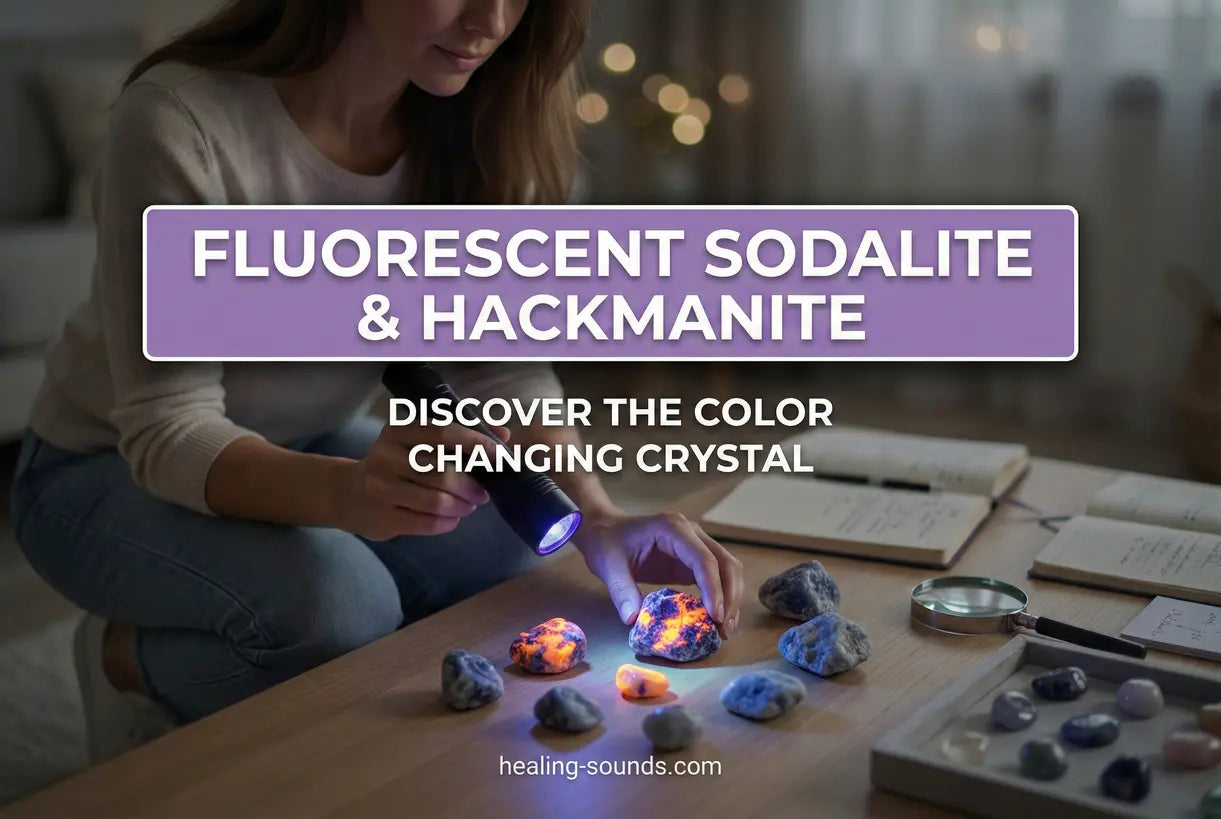
Imagine walking along a rocky beach at night, shining a UV flashlight across the pebbles, and suddenly seeing a stone erupt in a vibrant orange glow. This isn't science fiction; it is the captivating reality of fluorescent sodalite. Known to collectors and mineral enthusiasts for its hidden "fire," this unique variety of sodalite transforms under ultraviolet light, revealing secrets invisible to the naked eye. Whether you know it by the trade name Yooperlite or simply as glowing sodalite, this stone bridges the gap between geological wonder and spiritual mystery.
For crystal collectors and spiritual seekers alike, fluorescent sodalite and its rare cousin, hackmanite, offer more than just a visual spectacle. These stones are celebrated for their ability to shift perspective—both literally, through their color-changing properties, and metaphysically, by enhancing intuition and truth. In this guide, we will explore the science behind the glow, the difference between standard fluorescence and the reversible color change of hackmanite sodalite, and how you can harness their energy for your own collection or spiritual practice.
What is Fluorescent Sodalite?
Standard sodalite is a deep blue tectosilicate mineral widely appreciated for its rich color and white calcite veins. However, fluorescent sodalite possesses a special characteristic: it reacts strongly to ultraviolet (UV) light. When exposed to a UV source, these seemingly ordinary grey or blue stones illuminate with a bright orange or yellow incandescence. This phenomenon has made varieties like Yooperlite—syenite rocks rich in fluorescent sodalite found in Michigan—incredibly popular among rock hounds.
- Fluorescence: The immediate emission of light by a substance that has absorbed light or other electromagnetic radiation.
- Key Feature: While standard sodalite is blue, fluorescent varieties often appear grey or white in daylight but glow magma-orange under UV.
The magic lies in the mineral composition. Traces of disulfide usually activate this reaction. It reminds us that there is often more to reality than what we see on the surface, making sodalite under UV light a powerful symbol for hidden truth and inner potential.


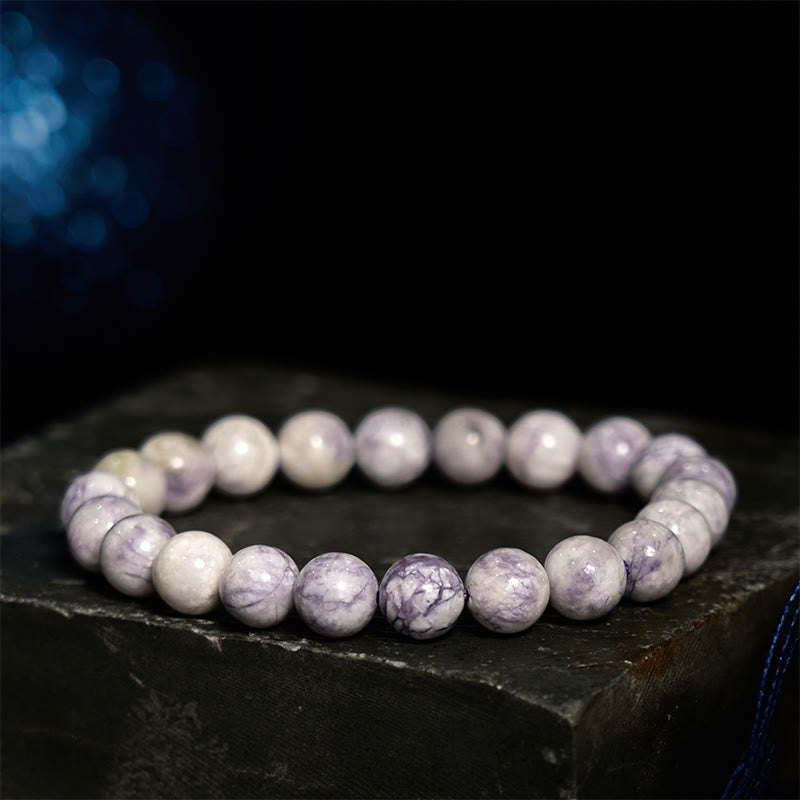
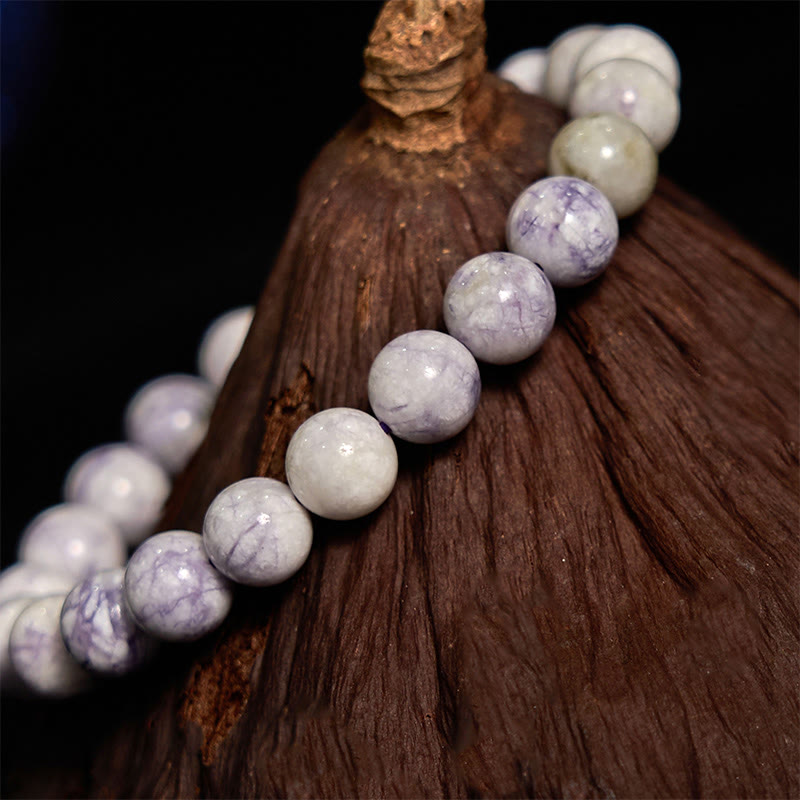
Yooperlite 8 mm spirituelles Kreativitätsarmband für Selbstvertrauen
$24.90 $35.90
Experience the magic of fluorescent sodalite with this Yooperlite bracelet, glowing beautifully under UV light.
Explore ProductHackmanite vs. Fluorescent Sodalite: Understanding the Difference
While many sodalites glow, hackmanite sodalite is a specific, sulfur-rich variety that exhibits a rare optical phenomenon known as tenebrescence (or reversible photochromism). This makes it distinct from standard fluorescent sodalite.
Fluorescent sodalite glows only while the UV light is active. Once you turn off the flashlight, the glow fades instantly. Hackmanite, however, can physically change color. When dug up or kept in the dark, purple sodalite (hackmanite) often appears violet or pink. Exposure to sunlight can fade it to white or grey. Surprisingly, exposing it to short-wave UV light or keeping it in the dark can return it to its original vibrant violet hue. This "chameleon" quality makes color changing sodalite a prized specimen for any serious collection.
The Science Behind the Glow
Why do these stones behave this way? It comes down to crystal lattice defects and impurities. In fluorescent hackmanite and sodalite, sulfur ions trap energy from UV light. As the electrons become excited and then return to their ground state, they release energy in the form of visible light—creating that signature glowing effect. With tenebrescent hackmanite, the electrons get stuck in "color centers," causing a temporary change in the stone's absorption spectrum and, consequently, its visible color.
To fully appreciate the visual difference and the hunting experience, watch this detailed explanation and demonstration of UV reactive rocks.
Metaphysical Properties of Glowing Stones
Beyond the chemistry, blue hackmanite and glowing sodalite are revered in the metaphysical community. Standard sodalite is known as a stone of logic, rationality, and efficiency. It stimulates the Pineal Gland and the Third Eye, deepening meditation. The fluorescent varieties add an element of revelation and hidden knowledge.
Working with uv reactive sodalite can symbolize illuminating the shadow self. Just as the stone reveals its true colors under specific light, it helps the user uncover subconscious thoughts and feelings. It is often used to bring clarity to mental confusion and to encourage rational thought, objectivity, truth, and intuition. For those seeking glowing blue stones or purple varieties, the energy is often described as higher frequency, aiding in spiritual evolution and the acceptance of change.

Harmony and Balance Collection

Invite harmony with a sodalite bead bracelet, ideal for meditation and tuning into crystal energy daily. Learn more ➔

Combine sodalite's calming energy with aventurine and obsidian in this powerful bracelet for balance and clarity. Learn more ➔
How to Identify and Collect
Collecting these minerals requires the right tools. To find fluorescent sodalite, a 365nm UV flashlight is generally recommended over the cheaper 395nm versions, as the lower wavelength activates the fluorescence more effectively without washing out the colors with purple visible light. Whether you are hunting on the shores of Lake Superior for Yooperlite or browsing a gem show for Afghan hackmanite, seeing the stone "in the dark" is the only way to verify its identity.
When displaying your collection, remember that the tenebrescent properties of hackmanite can fade if left in bright sunlight permanently. Collectors often keep these stones in light-proof boxes to preserve their deep purple or pink hues, bringing them out only to demonstrate the fascinating color change or the vibrant orange glow under UV lamps.

Conclusion
From the rugged beaches of Michigan to the mines of Afghanistan, fluorescent sodalite and hackmanite captivate us with their hidden abilities. They challenge our perception of what a rock is, transforming from grey, unassuming stones into brilliant embers of orange light. Whether you are drawn to the science of fluorescence or the metaphysical symbolism of hidden truth, adding a piece of color changing sodalite to your life invites a sense of wonder and discovery.
Explore our collection to find your own piece of magic, and remember: sometimes the brightest light comes from within, waiting for the right energy to reveal it.
Frequently Asked Questions about Fluorescent Sodalite
Fluorescent sodalite glows due to impurities within its crystal structure, typically disulfide activators. When ultraviolet light hits these impurities, electrons absorb the energy and re-emit it as visible light, creating the characteristic orange or yellow glow.
While both glow under UV light, hackmanite is a specific variety of sodalite that is also tenebrescent. This means hackmanite can change its body color (often from purple to white and back) when exposed to sunlight or darkness, whereas standard fluorescent sodalite only glows and does not change its daylight color.
You can identify hackmanite by testing for tenebrescence. Place the stone in the dark or expose it to short-wave UV light to see if it turns purple or pink. Then, expose it to bright sunlight; if the color fades to white or grey, it is likely hackmanite.
Metaphysically, fluorescent sodalite is associated with revealing hidden truths, enhancing intuition, and balancing the throat and third eye chakras. It is believed to help users see past illusions and accept their shadow self, promoting inner peace and self-acceptance.
Collectors typically display these crystals in cases equipped with UV lighting to showcase their glow. For tenebrescent hackmanite, collectors may keep specimens in light-proof boxes to preserve their saturated color, taking them out to demonstrate the color-change effect.