
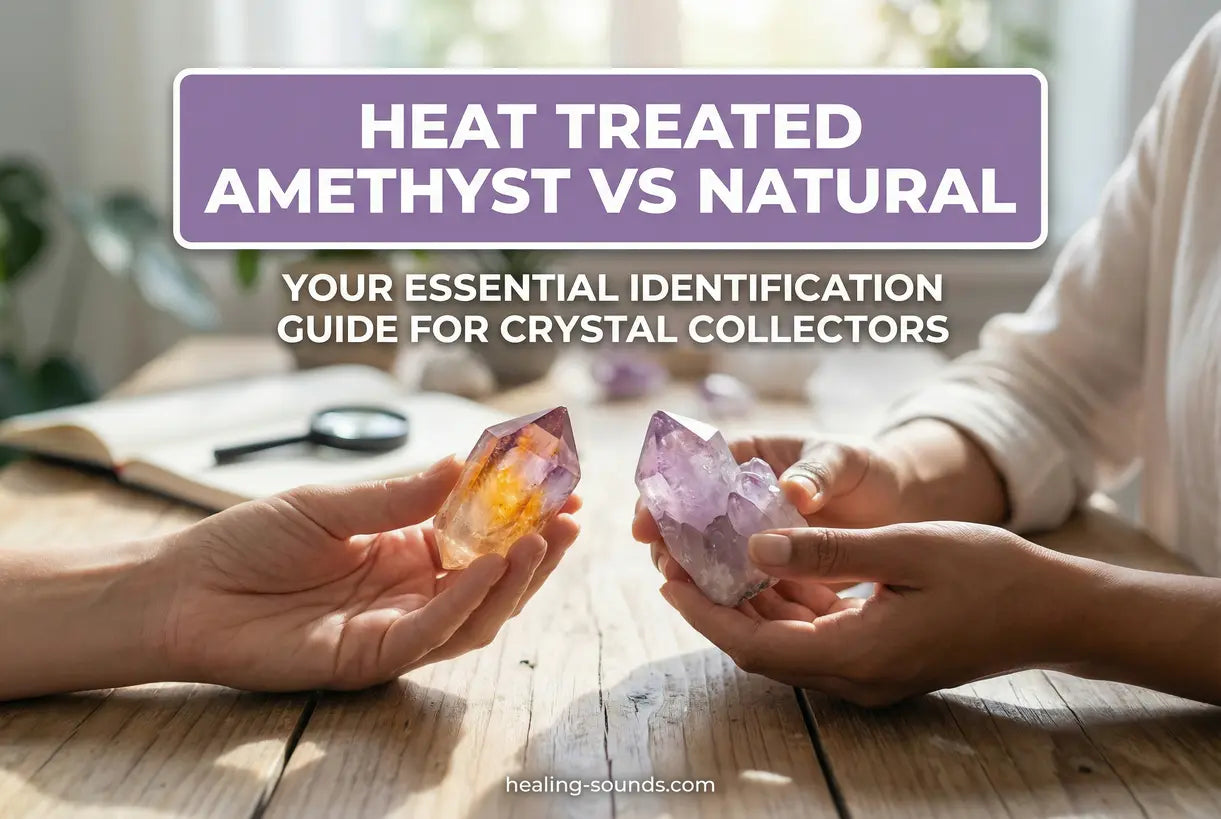
For spiritual crystal enthusiasts and collectors alike, distinguishing between a natural amethyst and its modified counterparts is a crucial skill. Whether you are building a healing grid or selecting jewelry, understanding the origins of your stone ensures you align with the specific energies you seek. One of the most common modifications in the crystal market today is heat treated amethyst. While often sold under different names, knowing how to identify it ensures you make informed, mindful purchases.
In this guide, we will explore the visual and structural clues that separate natural specimens from those that have undergone high-temperature modification. We will also delve into the implications this process has on the stone's properties and spiritual meaning, helping you navigate the marketplace with confidence.
What Does "Heat Treated" Actually Mean?
Amethyst is a variety of quartz that owes its purple hue to irradiation, iron impurities, and the presence of trace elements. When this stone is exposed to high temperatures—either naturally within the earth or artificially in a lab—the iron valences change state, altering the color. Heat treated amethyst refers to stones that have been baked in kilns to transform their natural purple color into varying shades of yellow, gold, or deep orange.
It is important to note that while this process changes the color, the base material remains quartz. However, for those seeking specific vibrational frequencies, the distinction between a stone forged by geological heat over millennia and one flash-heated in a furnace is significant. Understanding heat treated amethyst identification starts with recognizing these color shifts.
To better understand what to look for, examining the stone closely under good lighting is essential. You need to look past the general color and inspect the internal structure and zoning of the crystal.

Visual Identification: Spotting the Differences
Identifying treated stones relies heavily on visual cues. Natural amethyst typically displays a cool, translucent purple, ranging from pale lilac to deep violet. In contrast, heat treated amethyst often appears opaque with a "baked" quality. Here are the primary signs to look for:
1. Color Concentration and Tips
In natural amethyst geodes, the purple color is often most intense at the tips of the crystal points. When amethyst is heat-treated to mimic citrine, the color turns a burnt orange or bright yellow. A tell-tale sign of treatment is highly concentrated, dark orange tips that fade abruptly into a stark white base. Natural citrine or untreated stones usually have a more uniform, smoky, or champagne-colored consistency throughout the crystal, lacking that drastic white-to-orange contrast.
2. The "White Base" Indicator
One of the easiest ways to identify a treated geode is the base. Heat treated amethyst clusters almost always retain a solid, opaque white base where the crystal attached to the host rock. The heat affects the tips (where the iron is) but leaves the white quartz bottom unchanged. If you see a bright yellow or orange cluster with a stark white bottom, it is highly likely to be treated.

3. Texture and Clarity
The heating process can sometimes compromise the crystal lattice, making the stone more brittle or prone to crumbling compared to its natural state. Visually, treated stones may look "toasted" or have a matte finish if not polished, whereas natural quartz varieties generally maintain a glassy, vitreous luster. Observing a Natural Amethyst Cluster can provide a baseline for what the natural termination and clarity should look like.
The "Citrine" Confusion: Heat Treated Amethyst vs Natural Citrine
A significant portion of the "Citrine" sold in rock shops is actually heat treated amethyst. This distinction is vital for collectors. Natural citrine vs heat treated stones differ not just in origin but in appearance. Natural citrine is rare and expensive; it usually features a pale yellow to smoky brown hue and often lacks a white base. If a vendor offers "Citrine" that is bright orange, relatively inexpensive, and comes in the shape of a classic amethyst geode, you are looking at treated amethyst.
For a visual deep dive into this comparison, watch the video below which clearly illustrates the differences between natural citrine and heat-treated varieties.
Spiritual Meaning and Energetic Properties
Does the heat treatment affect the stone's energy? This is a common debate in the crystal community. Many practitioners believe that heat treated amethyst properties differ from both natural amethyst and natural citrine. While natural amethyst is associated with the Third Eye and Crown chakras, promoting intuition and calm, the heating process is said to shift the vibration toward the Solar Plexus chakra due to the color change to yellow/orange.
However, some purists argue that the anthropogenic heating process disrupts the natural energy flow of the crystal. Others view heat treated amethyst as a valid stone for abundance and creativity, simply carrying a "lighter" or different frequency than natural Citrine. If you prefer working with purely Earth-made energies, sticking to natural stones like a Chevron Amethyst Tumbled Stone—which shows clear natural banding—might be preferable. Similarly, when choosing jewelry, an Amethyst Pendant Necklace with natural coloration allows you to carry the authentic soothing energy of the stone.
Summary Checklist for Identification
To help you quickly determine if a stone is natural or treated, refer to this checklist or the infographic below:
- Color: Burnt orange/yellow (Treated) vs. Purple/Violet (Natural Amethyst) vs. Pale Champagne/Smoky (Natural Citrine).
- Base: Stark white opaque base (Likely Treated).
- Uniformity: High contrast between tip and base (Treated) vs. Consistent clarity (Natural).
- Shape: "Tooth" shape geodes are common for treated amethyst sold as citrine.


Compare with Natural Specimens
Conclusion
Understanding the difference between heat treated amethyst and natural stones empowers you to curate a crystal collection that truly resonates with your intentions. Whether you appreciate the bright, sunny aesthetics of treated crystals or prefer the raw, unaltered vibration of natural minerals, the key is transparency and knowledge. By paying attention to color saturation, base structure, and texture, you can confidently identify what you are holding.
Frequently Asked Questions about Heat Treated Amethyst
This depends on your goal. If you want natural Earth energy, genuine Citrine is considered "better" by purists. However, heat-treated amethyst is widely available, affordable, and many people enjoy its bright color and associate it with abundance, making it a valid choice for decorative or basic solar plexus work.
Extreme heat can make amethyst more brittle. While it remains a quartz (Mohs hardness of 7), the thermal shock from the treatment process can induce internal fractures, potentially making heat-treated stones slightly more prone to breakage or crumbling than their natural counterparts.
If a crystal is heat-treated, it means it has been exposed to high temperatures (usually 800-900°F or more) to alter its color. In the case of amethyst, this process changes the iron impurities from purple to yellow/orange, mimicking the appearance of Citrine.
Look for a "burnt" orange or yellow color, a stark white opaque base, and concentrated color at the very tips of the crystals. Natural amethyst is purple, and natural Citrine is usually a consistent pale smoky yellow without a white base.
Heat treated amethyst typically looks like a deep orange or reddish-yellow crystal cluster. It often has a matte or opaque finish and retains the white quartz matrix (rock) at the bottom, which contrasts sharply with the colored tips.