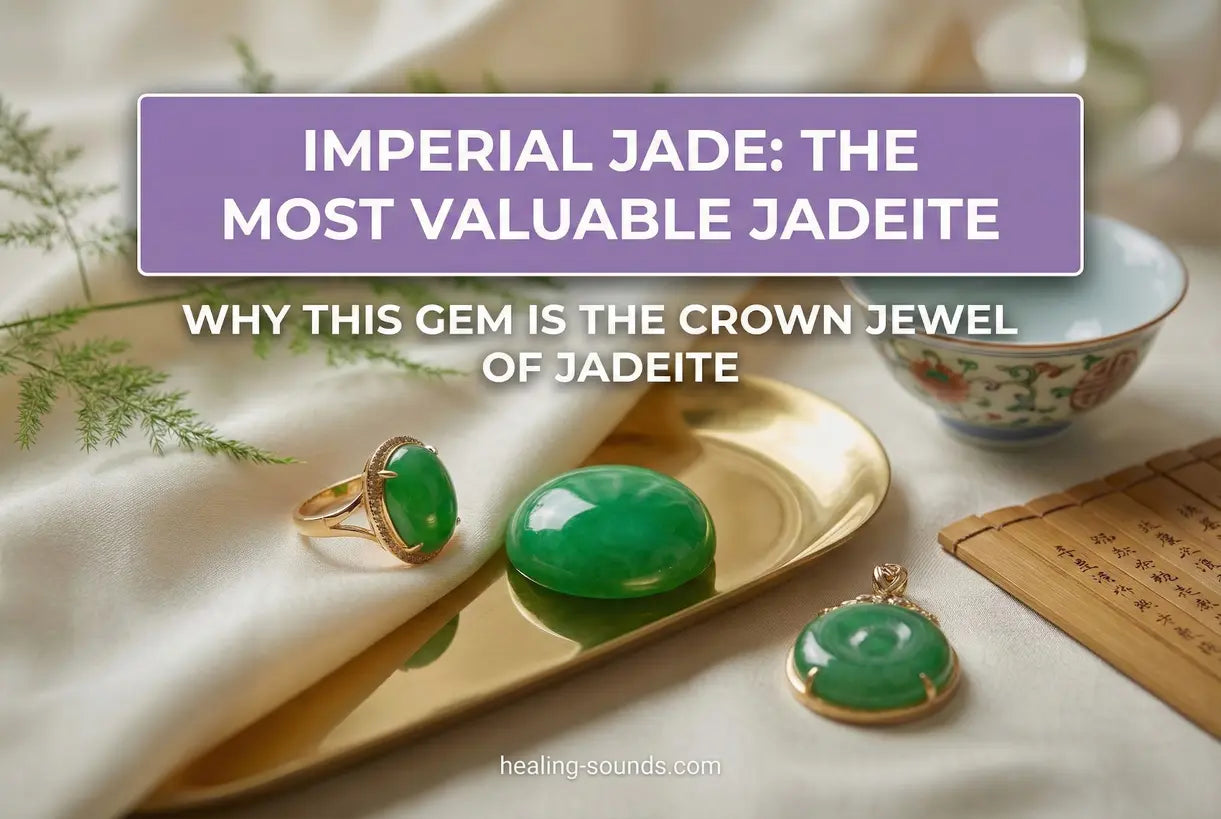
For centuries, one gemstone has reigned supreme in the courts of emperors and the collections of connoisseurs: imperial jade. Far more than just a stone, this electrifyingly vibrant gem represents the absolute pinnacle of the jadeite family. Known for its intense, emerald-green hue and almost glowing translucency, imperial jade is often more valuable per carat than diamonds.
While many people are familiar with common jade, imperial jade stands in a league of its own. It is the rarest form of jadeite, historically reserved for royalty and now coveted by investors and crystal enthusiasts alike. In this guide, we will explore the factors that drive imperial jade value, its profound spiritual meaning, and how to distinguish this exquisite treasure from ordinary stones.
What Exactly is Imperial Jade?
To understand imperial jade, one must first understand the difference between the two minerals commonly called "jade": nephrite and jadeite. Nephrite is the more common, durable stone often used in ancient carvings, ranging from creamy white to dark spinach green. Jadeite, however, is harder, rarer, and comes in a wider spectrum of colors.
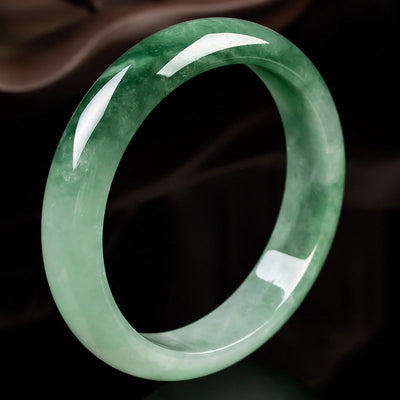
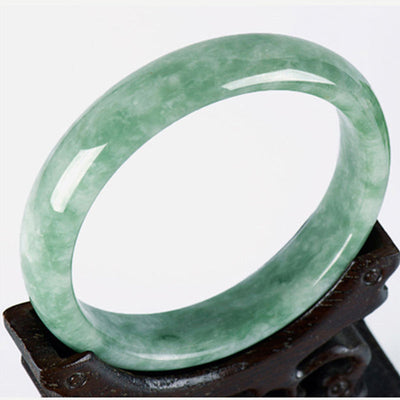
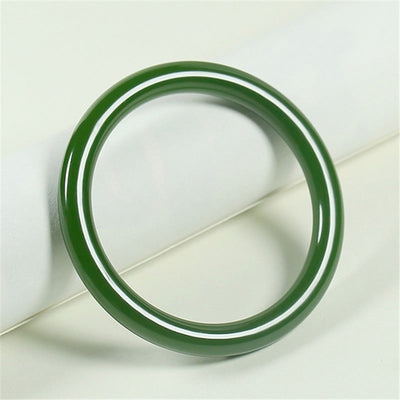
Imperial jade is a specific classification of the finest jadeite. It is defined by a distinct, vivid green color often described as "emerald green" or "kingfisher green." Unlike lesser grades, the color is evenly distributed and highly saturated, with no hint of grey. Furthermore, true imperial jade possesses a high degree of transparency, allowing light to penetrate the stone and create a gelatinous, glowing effect.

The Factors Behind Imperial Jade Value
The astronomical imperial jade price is driven by its extreme rarity. Geological conditions must be perfect to form jadeite with such high chromium content (which gives it the green color) while maintaining excellent crystal structure for transparency.
Key Valuation Criteria
- Color: The most critical factor. It must be a pure, penetrating vibrant green.
- Translucency: High-quality imperial jade is semi-transparent to transparent (glassy).
- Texture: Fine-grained texture results in a high luster and smooth finish.
When you see imperial jade for sale, even small cabochons can command prices in the millions of dollars if they meet these strict criteria. It is widely considered one of the most secure investment gemstones in the world, often outperforming gold in value retention.


Spiritual Meaning and Metaphysical Properties
Beyond its financial worth, imperial jade meaning is deeply rooted in spiritual abundance. In many Eastern cultures, it is believed to bridge the gap between heaven and earth. The intense green color resonates powerfully with the Heart Chakra, promoting emotional healing, compassion, and love.
Wearing jade jewelry, particularly high-quality jadeite, is thought to attract wealth and protect the wearer from negative energies. It is the ultimate stone of prosperity, often passed down through generations as a talisman of good fortune and longevity.

6 mm Jade-Armband mit Peace-Schnalle für Wohlstand und Überfluss
$24.90 $35.90
Celebrate the rarity of imperial jade with this bracelet, symbolizing abundance and cultural heritage with every wear.
Explore ProductImperial Jade vs. Regular Jade: Spotting the Difference
The primary confusion for buyers lies in the difference between imperial jade and standard green jade. While "jade" is a generic term, "imperial" is a specific grade. Standard jadeite might be green, but it often appears cloudy, opaque, or patchy. Imperial jade, by contrast, has a "greasy" or vitreous luster that looks almost like colored oil.
Authentic imperial jade is almost exclusively sourced from Myanmar (formerly Burma). Deposits in other parts of the world rarely, if ever, produce jadeite of this caliber. For further reading on the geological rarity of these stones, resources like the Gemological Institute of America (GIA) provide extensive scientific data.

Identifying Imitations and Treatments
Because of its high value, the market is flooded with treated stones. Buyers should be aware of the "A, B, C" grading system:
- Type A: Natural, untreated jadeite (only traditional wax polishing is accepted). True imperial jade must be Type A.
- Type B: Bleached with acid to remove impurities and impregnated with polymer resin.
- Type C: Dyed to enhance color. These stones have little value compared to natural jadeite.
Wear the Energy of Jade

Experience luxury and tradition—this Hetian jade bracelet features powerful symbols for prosperity and authentic jadeite energy. Learn more ➔

Jade Herz Wohlstand Halskette Anhänger für Fülle
$24.90
$35.90
Wear a heart-shaped jade pendant that echoes imperial jadeite’s legacy of fortune and spiritual protection. Learn more ➔
Investment and Care
For collectors, an imperial jade ring or pendant is not just an accessory; it is a legacy. As mines in Myanmar deplete, the availability of top-tier material shrinks, driving prices upward. Unlike diamonds, which have a standardized price list, jadeite valuation is an art form, relying heavily on the visual appeal and the "water" (transparency) of the stone.
Caring for emerald green jade is straightforward but requires attention. While jadeite is tough, it can fracture upon hard impact. Clean your jade with warm, soapy water and a soft cloth. Avoid ultrasonic cleaners, which can damage the stone's structure over time.

Conclusion
Imperial jade remains the undisputed queen of jades—a gemstone that captures the essence of life, nature, and abundance in its vivid green depths. Whether you are drawn to it for its investment potential, its rich cultural history, or its powerful vibrations of prosperity, owning a piece of jade is a connection to the earth's deepest treasures. As you explore the world of fine crystals, remember that true quality speaks through color and light.
Frequently Asked Questions about Imperial Jade
Yes, imperial jade is one of the most valuable gemstones in the world. Top-quality specimens can cost more per carat than diamonds, often selling for millions of dollars at auction due to their extreme rarity and cultural significance.
"Jade" is a general term covering both nephrite and jadeite. Imperial jade refers specifically to the highest quality of Type A jadeite, characterized by a vibrant emerald green color and high translucency, whereas common jade may be opaque, duller, or different colors.
It is rare because the geological conditions required to form jadeite with such high chromium content (for the green color) and perfect crystal alignment (for transparency) are exceptionally scarce. Most commercial deposits are located only in Myanmar.
True imperial jade is found almost exclusively in the jadeite mines of Myanmar (formerly Burma). While jadeite exists elsewhere (like Guatemala), the "imperial" quality usually comes from Burmese deposits.
Its combination of intense, saturated color and glass-like transparency makes it unique. Culturally, it is revered as the "Stone of Heaven," symbolizing status, purity, and protection, making it special for both its beauty and its metaphysical meaning.