For centuries, the jade necklace has been far more than a simple adornment. Revered in Eastern cultures and embraced globally by spiritual seekers, jade is known as the "Stone of Heaven." It represents a tangible connection to purity, protection, and prosperity. Whether you are drawn to a simple bead strand or an intricately carved jade pendant, wearing this stone is often seen as a commitment to personal growth and emotional balance.
For women seeking to align their spiritual wellness with their personal style, jade jewelry offers a unique grounding energy. It is believed to bless whatever it touches, serving as a talisman for wealth and a guardian against negative energies. In this guide, we will explore the profound meanings, diverse styles, and essential factors that determine the value of a real jade necklace, helping you find a piece that resonates with your spirit.
The Spiritual Meaning of Wearing a Jade Necklace
When you choose to wear a jade necklace, you are inviting a specific vibration into your aura. Historically, jade is associated with the Heart Chakra, promoting love, compassion, and emotional healing. It is often said that jade chooses its owner, finding its way to those who need its stabilizing influence the most.
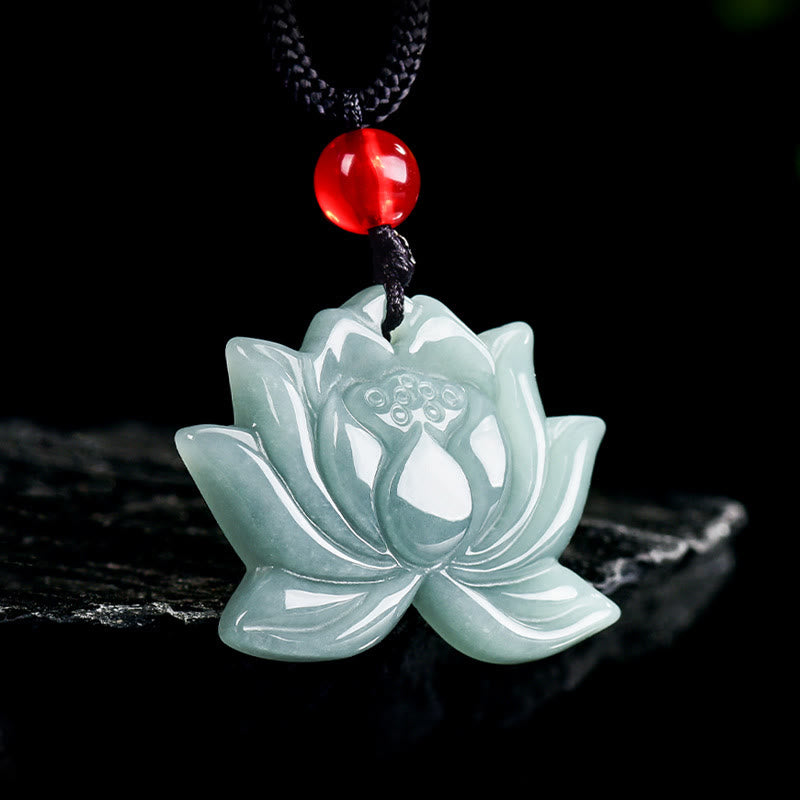
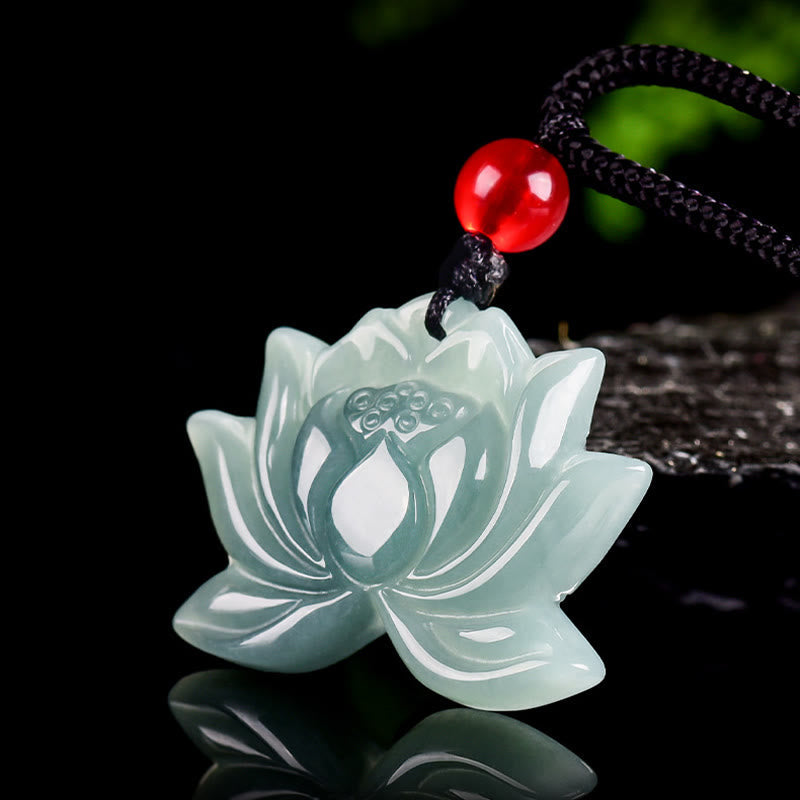
Beyond general well-being, specific carvings carry distinct meanings. A jade pendant carved into a fox may symbolize wit and protection against deception, while a lotus represents purity and spiritual rebirth. Wearing these symbols close to the heart amplifies their intention, serving as a daily reminder of your path toward harmony and abundance.

Different Styles of Jade Necklaces & Pendants
The world of jade jewelry is vast, ranging from minimalist designs to ornate masterpieces. Understanding the styles available can help you select a piece that fits both your aesthetic and energetic needs.
Traditional Carved Pendants
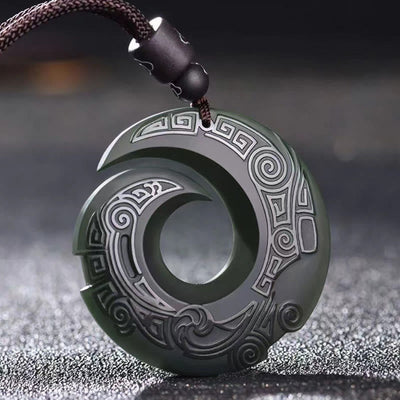
One of the most popular forms is the carved pendant. Artisans sculpt jade into auspicious symbols such as dragons, phoenixes, or the mystical Nine-Tailed Fox. These pieces are often strung on adjustable cords, placing the focus entirely on the stone's quality and craftsmanship. For instance, the historical significance of jade carvings often ties back to folklore where these symbols served as protectors for the wearer.
Beaded Necklaces
A green jade necklace made of polished beads is a classic choice. The circular shape of the beads symbolizes eternity and the cyclical nature of life. These necklaces provide a continuous flow of soothing energy around the throat and heart centers.
Modern Gold and Silver Settings
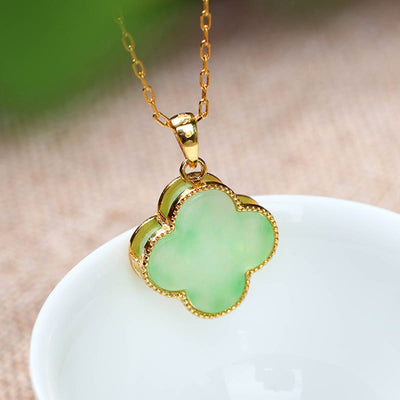
For a contemporary look, many designers set jade cabochons or carvings in precious metals. A jade necklace gold setting adds a warm, luxurious contrast to the cool green stone, while silver offers a sleek, modern vibration.

Grüner Jade Neunschwänziger Fuchs Glücksbringer Halskette Anhänger
$46.90 $67.90
Invite wisdom and prosperity with this hand-carved jade pendant, inspired by rich Eastern tradition and symbolic energy.
Explore ProductAuthenticity: Real Jade vs. Fake
With the popularity of jade comes a market flooded with imitations. Knowing how to identify a real jade necklace is crucial for any buyer. Authentic jade is cool to the touch and dense. It should not contain air bubbles, which are a common sign of glass imitations.
Jade is broadly categorized into two mineral species: Nephrite and Jadeite. While both are "real jade," Jadeite is generally rarer and more valuable, often displaying more vivid colors. Nephrite is more common and typically comes in darker, spinach-green shades or creamy whites.
To truly understand the nuances of identifying authentic pieces, visual guides are incredibly helpful. Watch the video below to learn how to distinguish between genuine jade and common fakes.
Value and Color Significance
When asking "What color jade is most valuable?", the answer is almost unequivocally "Imperial Green." This semi-transparent, emerald-green shade of Jadeite is the most prized and expensive. However, jade comes in a spectrum of colors, each with its own beauty and price point.
- Green: The most traditional color, symbolizing growth, health, and prosperity. Ranging from pale mint to deep forest green.
- Lavender: A spiritual color often associated with the crown chakra and higher wisdom.
- White/Cream: Known as "mutton fat" jade, specifically in Nephrite, representing pure intellect and calmness.
- Cyan/Blue-Green: A rarer hue that promotes communication and truth.

The value of a jade necklace is determined by the "3 Cs" plus translucency: Color, Clarity, Cut, and Transparency. Highly translucent stones with intense, even color command the highest prices. However, opaque stones with rich texture, like many Nephrite pieces, are highly valued for their durability and "greasy" luster.


Finding Your Perfect Jade Match
Selecting the right jade jewelry is a personal journey. Are you looking for a protector, a wealth magnet, or a tool for meditation? For those seeking balance and clarity, unique variations like Cyan Jade can offer a refreshing energy.
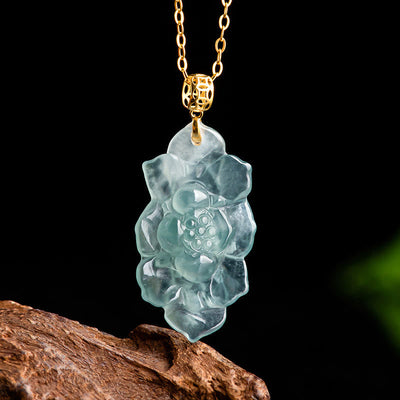
If your goal is to embody abundance and spiritual renewal, look for symbols like the Vajra or the Lotus. The Vajra cuts through ignorance, while the Lotus blooms through adversity. These meaningful designs transform a simple accessory into a powerful spiritual tool.
Sacred Symbols in Jade

Cyan Jade Vajra Star Harmony Halskette 62cm Unisex
$24.90
$35.90
Balance tradition and modern styling with this unisex cyan jade vajra necklace, crafted for harmony and spiritual clarity. Learn more ➔

Embody abundance and renewal with this intricately carved jade lotus pendant, perfect for spiritual growth and daily elegance. Learn more ➔
Caring for Your Jade
Jade is tough, but it requires care to maintain its luster. Clean your jade pendant with warm, soapy water and a soft cloth. Avoid harsh chemicals or ultrasonic cleaners, which can damage the stone's structure or any treatments it may have undergone. Regularly wearing your jade is actually one of the best ways to care for it; the natural oils from your skin are said to polish the stone over time, enhancing its glow—a process often poetically described as the jade "becoming alive."

Conclusion
Whether you are drawn to the deep green allure of a jade pendant for its beauty or its reputed ability to attract luck and harmony, investing in a high-quality piece is a decision that pays spiritual dividends. By understanding the history, verifying the authenticity, and choosing a symbol that aligns with your personal journey, your jade necklace becomes more than an accessory—it becomes a lifelong companion for your soul.
Frequently Asked Questions about Jade Necklaces
Wearing a jade necklace is often done to attract good luck, prosperity, and protection. Spiritually, it is believed to balance the Heart Chakra, promoting emotional healing and harmony. In many cultures, it is also seen as a protective talisman that wards off negative energy.
The cost of real jade varies immensely based on quality. A simple, authentic Nephrite jade pendant might cost between $30 to $100, while high-quality Jadeite jewelry can range from hundreds to millions of dollars. Treated jade (Type B or C) is significantly cheaper than untreated, natural (Type A) jade.
Jade necklaces are worth what the market dictates based on the stone's type (Nephrite vs. Jadeite), color intensity, translucency, and texture. Vintage or antique pieces with historical significance also carry higher value. However, affordable commercial-grade jade is widely available for casual wear.
Imperial Green is the most valuable color of jade. It is a vibrant, emerald-like green found in high-quality Jadeite. While lavender, red, and yellow jade also exist and can be valuable, the intense, semi-transparent green remains the gold standard for collectors.
Common styles include carved pendants (depicting animals, deities, or flowers), smooth bead strands, donuts (Pi discs), and cabochons set in gold or silver. Styles range from traditional knotted cords to modern fine jewelry settings suited for everyday elegance.