
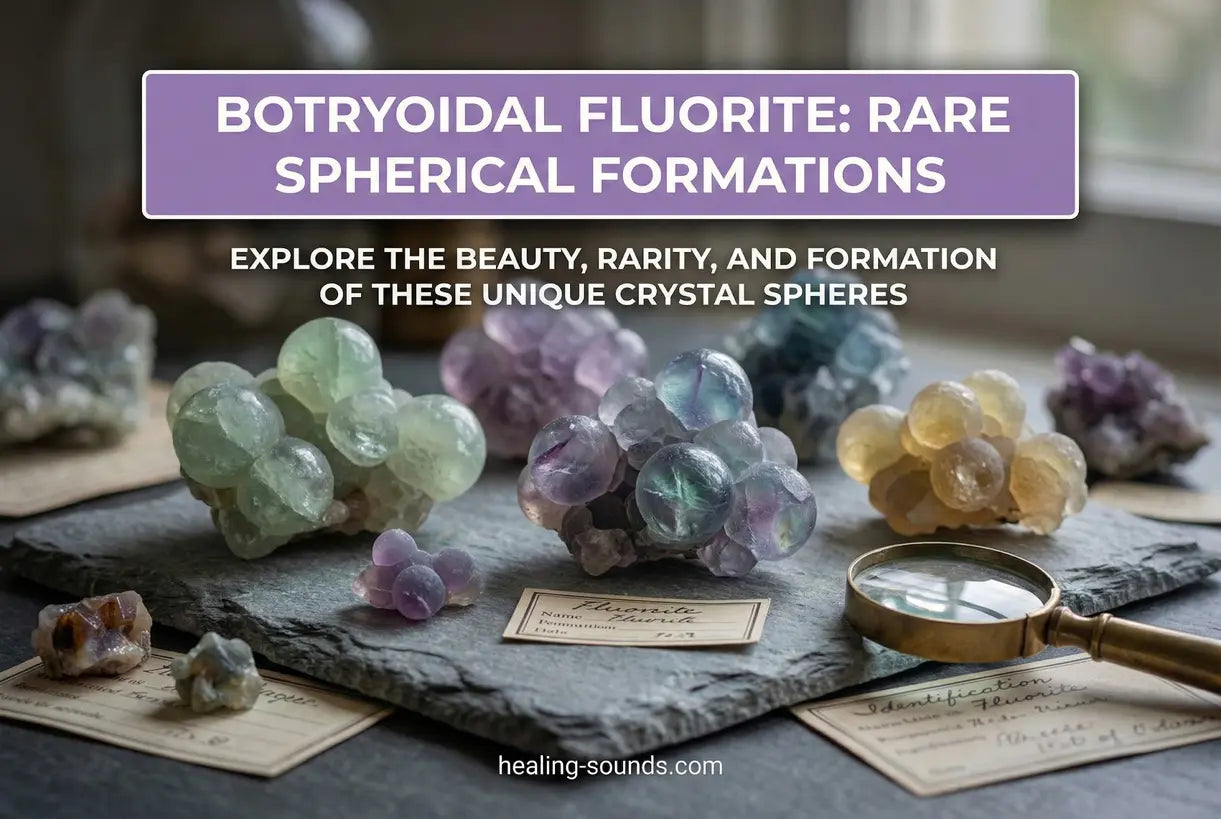
For the avid mineral enthusiast and the spiritual seeker alike, few discoveries are as captivating as botryoidal fluorite. While most of us recognize fluorite by its classic cubic or octahedral structures, this rare variation breaks the mold, presenting itself in stunning, grape-like clusters that defy standard geometric expectations. These smooth, spherical formations are not only a visual marvel for collectors but also hold a distinct energetic signature prized by healers.
In this article, we will delve deep into the world of these rare spherical formations. We will explore the geological conditions that create them, the significance of their unique shape, and why purple botryoidal fluorite and other color variations are so highly sought after in the gem trade.
What is Botryoidal Fluorite?
The term "botryoidal" comes from the ancient Greek word botrys, meaning "bunch of grapes." In mineralogy, this refers to a crystal habit where the mineral forms globular aggregates that resemble a cluster of grapes or bubbles. While this habit is common in minerals like hematite or malachite, seeing it in fluorite is exceptionally uncommon.
Typically, fluorite crystallizes in the isometric system, forming perfect cubes or octahedrons. Botryoidal fluorite represents a massive deviation from this norm. Instead of sharp angles and straight lines, you find smooth, rounded surfaces. This occurs when the mineral crystallizes around a nucleus—such as a speck of sand or dust—and grows outward in radiating layers at a rapid pace, preventing the formation of large, distinct crystal faces.
These spherical fluorite formations are often found lining the cavities of geodes or hydrothermal veins, sometimes layering over other minerals to create breathtaking, multi-textured specimens.

The Rarity and Formation Process
One of the most common questions we hear is: Why is this form so hard to find? The formation of botryoidal crystal habits requires specific geological conditions that are not always present during the fluorite crystallization process. It generally requires a rapid cooling environment or a high concentration of the mineral in the solution, forcing the fluorite to deposit quickly in layers rather than slowly building geometric lattices.
Because of these specific requirements, rare botryoidal specimens are significantly harder to source than their cubic counterparts. They are often mined in specific localities known for unique mineralogy, such as certain mines in India or China. The scarcity of these pieces makes them a prize for any serious collection.

Metaphysical Properties and Meaning
Beyond its geological allure, botryoidal fluorite meaning in the metaphysical world is tied deeply to its shape and energy flow. While standard fluorite is known as the "Genius Stone" for its ability to clear mental fog and structure chaotic thoughts, the botryoidal form adds a layer of gentle, radiating energy.
Spheres emit energy equally in all directions. Therefore, these spherical fluorite formations are believed to promote a more holistic sense of harmony. They are excellent for smoothing out rough emotions and fostering a sense of community and connection—much like the clustered "grapes" that form the whole.
Specifically, purple botryoidal fluorite is associated with the Third Eye chakra, enhancing intuition and spiritual communication, while green variations resonate with the Heart chakra, promoting emotional healing and growth. Healers often use these smooth stones to massage the aura, removing blockages without the "cutting" energy that sharp points might sometimes introduce.
Identifying Genuine Specimens
Identifying these specimens requires a keen eye. Genuine botryoidal fluorite will have a vitreous (glass-like) to dull luster and should display the characteristic hardness of fluorite (4 on the Mohs scale). It is important not to confuse it with other botryoidal minerals like chalcedony or prehnite. The key differentiator is often the color zoning and the specific crystal structure visible under magnification.
Below is a close-up looking at the unique texture and light interaction on the rounded surfaces of these crystals.

For a more in-depth look at how to identify and appreciate these formations, watch the explanation below. It covers the visual cues that distinguish high-quality specimens from the rest.
Collecting and Caring for Your Minerals
If you are lucky enough to acquire a piece of rare fluorite, proper care is essential. Fluorite is a relatively soft mineral. It can be scratched by harder substances like quartz or even glass. When cleaning your botryoidal specimen, use lukewarm water and a mild soap; avoid harsh chemicals or ultrasonic cleaners which can fracture the stone.
Additionally, fluorite is photosensitive. Prolonged exposure to direct sunlight can cause the vibrant greens and purples to fade over time. We recommend displaying your collection in a lit cabinet away from direct UV rays to preserve its beauty.

For those building a diverse collection, contrasting the organic shapes of botryoidal minerals with polished spheres or other soft stones creates a balanced aesthetic. You might consider pairing your fluorite with Amethyst for a color harmony or Lepidolite for a texture contrast.
Complete Your Crystal Collection
Conclusion
Botryoidal fluorite serves as a stunning reminder of nature's ability to surprise us. Its departure from the rigid geometry of standard fluorite into soft, bubbling spheres makes it a standout piece for any enthusiast. Whether you are drawn to it for its scientific rarity, its striking botryoidal crystal habits, or its soothing metaphysical energy, adding a specimen to your collection is a celebration of the earth's diversity.
We invite you to explore the unique textures and energies of our curated mineral selections, perfect for elevating your space and your spirit.
Frequently Asked Questions about Botryoidal Fluorite
Yes, botryoidal fluorite is considered quite rare. While fluorite is abundant, the specific botryoidal (grape-like) habit requires unique geological conditions, making these specimens much less common than cubic or octahedral forms.
Botryoidal formations are caused when a mineral crystallizes rapidly around a nucleus (like sand or dust) in a radial pattern. This growth happens too quickly for large crystal faces to form, resulting in smooth, rounded, globular shapes.
While opinions vary, Blue John Fluorite (found only in Derbyshire, UK) and botryoidal fluorite are contenders for the rarest forms due to their limited localities and unique formation requirements.
Metaphysically, botryoidal fluorite is believed to radiate gentle, harmonious energy evenly in all directions. It is used to smooth over emotional roughness, enhance intuition (especially purple varieties), and promote community and connection.
They develop through concentric layering. As mineral-rich fluids deposit material, the crystal grows outward from a center point. Because the growth is uniform and often crowded, the crystals merge into rounded, bubble-like masses rather than distinct geometric shapes.