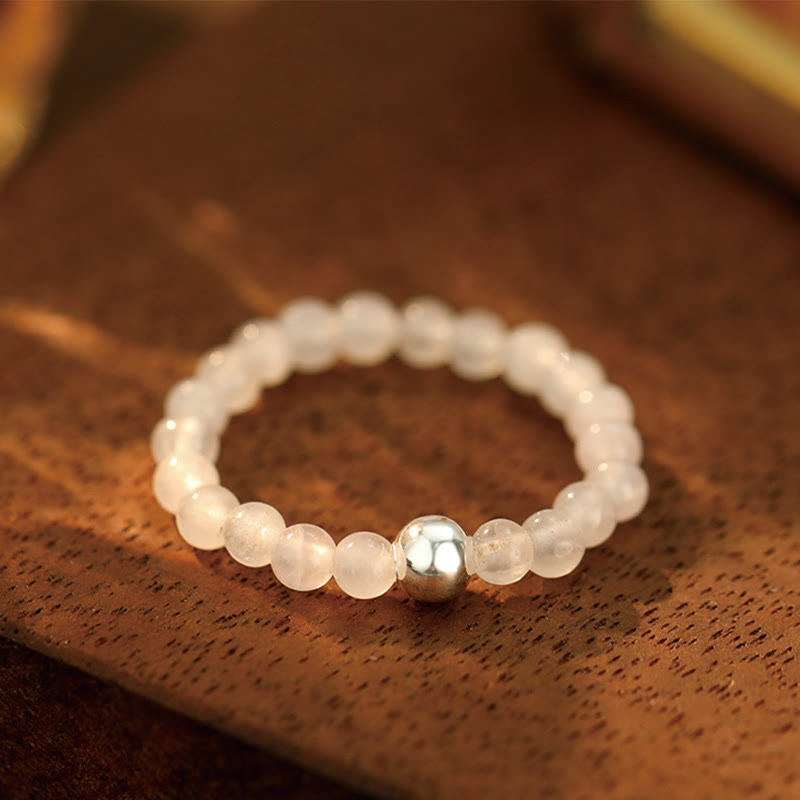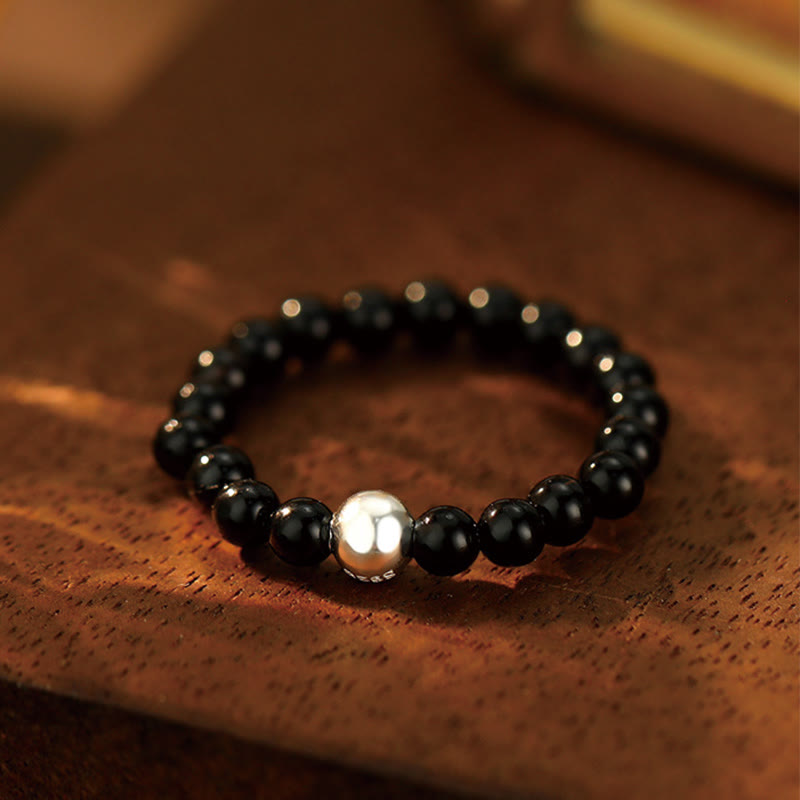

Holding a smooth, dark stone in your hand, you might wonder about its origins. Is this natural black onyx formed deep within the earth, or a clever imitation made of glass or plastic? With the rising popularity of crystal jewelry for spiritual grounding and protection, the market has seen an influx of synthetic alternatives. Distinguishing between real onyx and fakes is essential, not just for ensuring you get what you pay for, but to guarantee you receive the energetic benefits you seek.
Whether you are a collector, a spiritual practitioner, or simply someone who appreciates the beauty of genuine black onyx, knowing how to spot the difference is a valuable skill. In this guide, we will walk you through the specific characteristics of this powerful stone and provide actionable tests to verify the authenticity of your jewelry. By the end, you will know exactly how to identify real black onyx vs fake stones with confidence.
Understanding Natural Black Onyx
To identify the real deal, you must first understand what it is. Natural black onyx is a variety of chalcedony, a cryptocrystalline form of silica. It is chemically identical to agate but differs in its banding patterns. While historically significant and visually striking, truly naturally occurring solid black onyx is incredibly rare in nature.
Most of the genuine black onyx found in commercial jewelry today is actually grey chalcedony or agate that has been treated (usually heat-treated or dyed) to achieve that uniform, deep black color. In the gemological world, this is considered a standard, acceptable practice and the stone is still considered "real" because it is a natural mineral, not a man-made plastic or glass. However, "fake" onyx refers to materials like resin, glass, or plastic masquerading as stone.

Visual guide: Key differences between real and fake black onyx.
Immediate Visual and Tactile Inspections
You don't always need a laboratory to identify genuine black onyx. Your eyes and sense of touch are excellent tools for a preliminary assessment. The first thing to notice is the temperature.
The Temperature Test
Real crystals and stones, including onyx, are excellent heat conductors. When you first pick up a piece of real onyx, it should feel cool to the touch, even in a warm room. It will take a moment to warm up in your hand. Conversely, plastic or resin fakes will feel room temperature or warm immediately. Glass may feel cool, but usually warms up much faster than natural stone.
Surface Quality and Luster
Inspect the surface of the stone under a bright light. Genuine black onyx has a waxy to dull luster when unpolished, but takes a high, vitreous polish. However, it should look like a solid object. If you see tiny air bubbles just beneath the surface, you are likely looking at glass. Furthermore, plastic imitations often show mold seams or ridges where the material was joined, which you will never find on a natural gemstone.

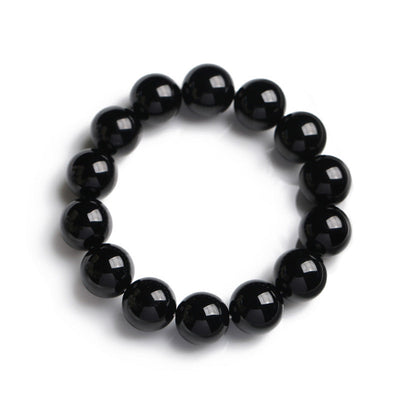

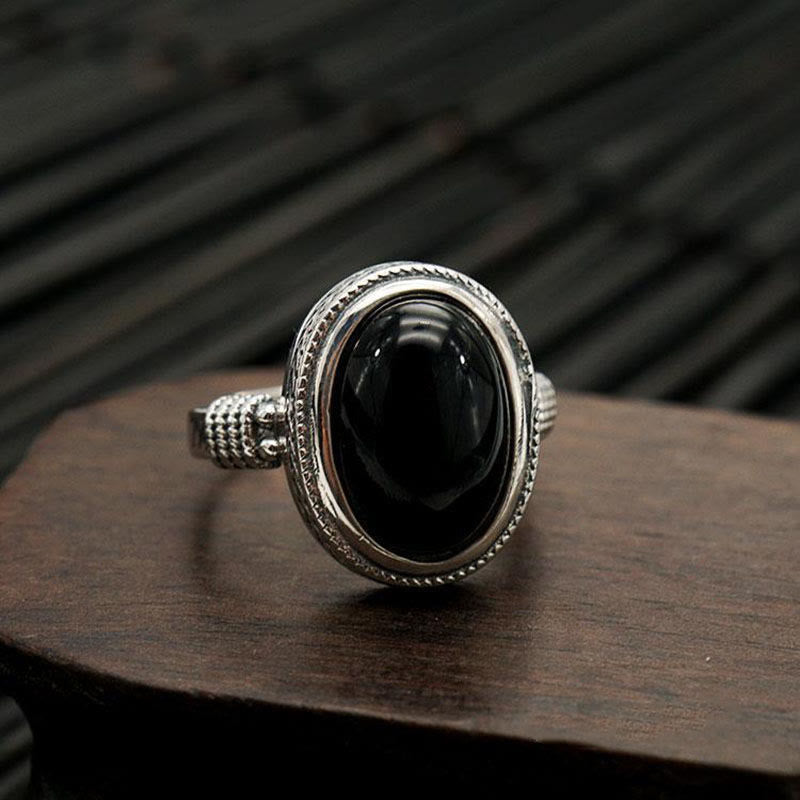
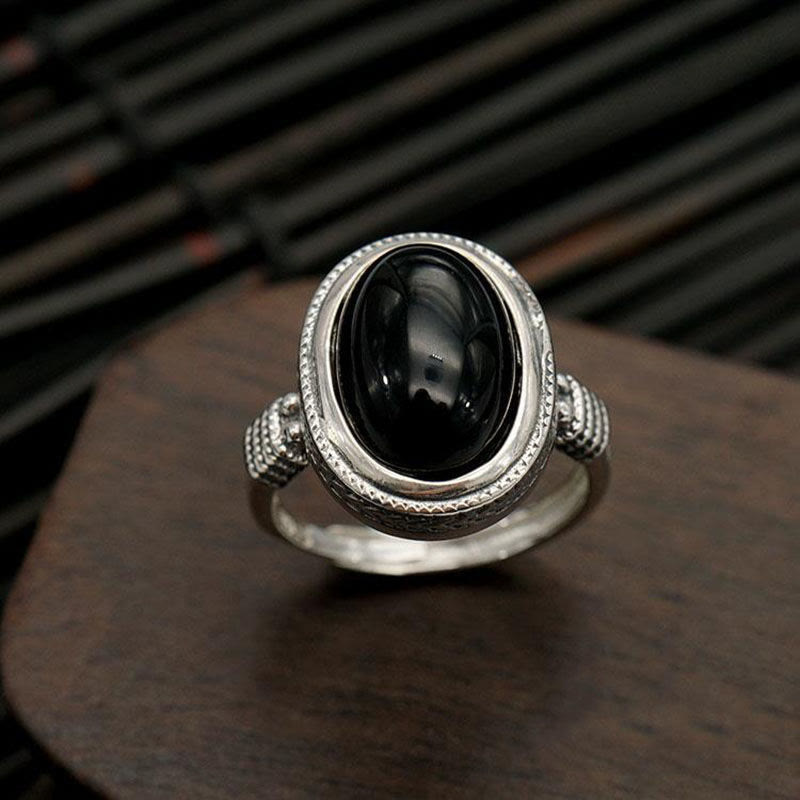
Verstellbarer spiritueller Schutzring aus schwarzem Onyx für Stärke und Glück
$24.90 $35.90
Experience genuine natural black onyx with this empowering ring—ideal for those seeking authentic, protective stone jewelry.
Explore ProductAdvanced Identification Techniques
If the visual and tactile tests are inconclusive, you can perform slightly more advanced checks to determine if you have black onyx jewelry made from real stone.
The Weight Test
Density is a giveaway. Natural black onyx is denser and heavier than plastic or resin. If the bead or stone feels surprisingly light for its size, almost like a piece of popcorn, it is likely a plastic imitation. Glass fakes can be heavier, making them harder to distinguish by weight alone, which is why cross-referencing tests is important.

Close inspection reveals the absence of bubbles and mold lines in genuine stones.
The Scratch Test (Mohs Hardness)
Onyx ranks between 6.5 and 7 on the Mohs scale of mineral hardness. This means it is relatively hard and durable. It cannot be easily scratched by common household items like a copper coin or a fingernail.
To perform a scratch test, try to scratch the surface of the stone (in an inconspicuous spot) with a steel knife or a needle. If the tool leaves a mark or gouge easily, the material is likely softer than real onyx, suggesting it could be plastic or soft glass. Conversely, a real onyx stone is hard enough to scratch ordinary glass. For more scientific data on mineral hardness, you can reference the Mohs Hardness Scale guide.
Real vs. Treated vs. Fake: Clarifying the Terminology
It is crucial to understand that "treated" does not mean "fake." As mentioned earlier, the vast majority of black onyx stone quality seen in the market is dyed chalcedony. This material possesses the same chemical composition and hardness as untreated onyx.
- Natural (Untreated): Extremely rare, often has visible banding (parallel lines of white or brown).
- Treated (Genuine): Natural chalcedony/agate that has been heated or dyed to achieve a uniform black color. This is the industry standard for genuine black onyx.
- Fake (Imitation): Man-made materials like glass, resin, or plastic. These carry no geological or energetic value.
Why Authenticity Matters for Spiritual Use
For those using crystals for healing, natural vs treated onyx is less of a concern than stone vs. plastic. Both natural and treated onyx are silicon dioxide minerals that carry the Earth's frequency. They are used for grounding, protection, and absorbing negative energy.
A plastic bead, however, is inert. It cannot hold or transmute energy in the way a crystalline structure can. Ensuring your black onyx jewelry is made from genuine mineral allows you to tap into the stone's reputation for providing strength and emotional stability.

Using simple tools at home to verify the authenticity of your black onyx.
Authentic Black Onyx Protection

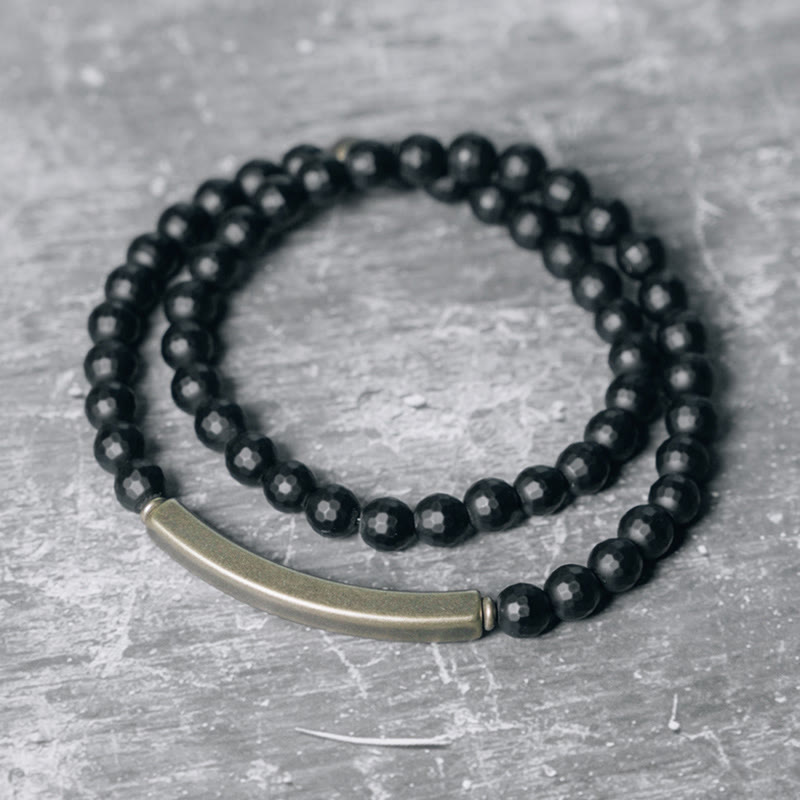
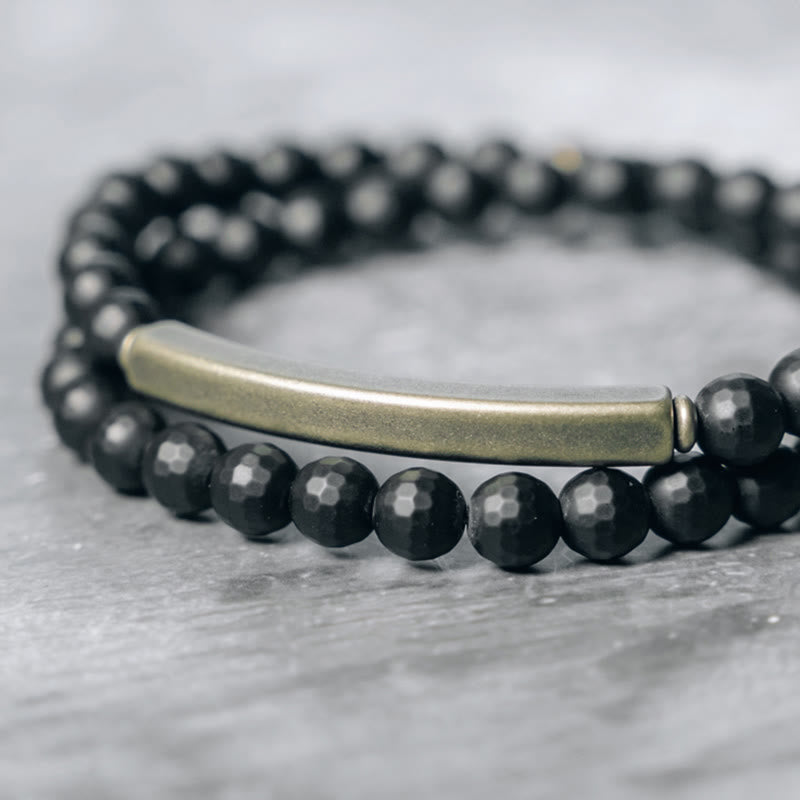
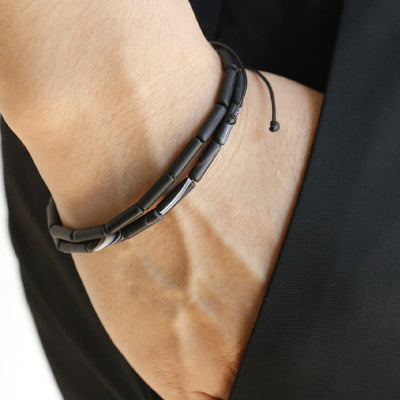
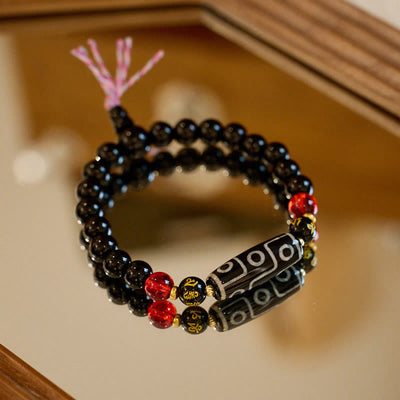
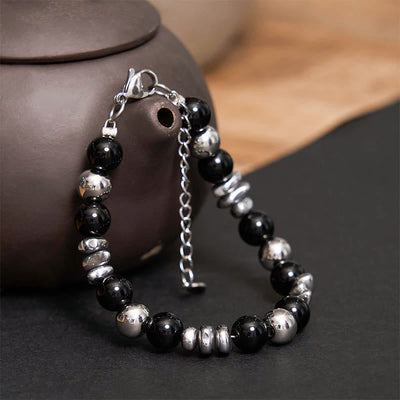
Showcase real black onyx beads with copper accents for double-layered protection and authentic powerhouse style on your wrist. Learn more ➔

Enjoy the balanced energy of genuine black onyx and jade—this versatile ring is crafted to highlight natural stone authenticity. Learn more ➔
Where to Buy and Value
Since how to spot fake onyx can sometimes be tricky without damaging the stone, the best defense is purchasing from reputable retailers who specialize in holistic wellness and crystals. Authentic black onyx is relatively affordable compared to precious gems like diamonds or rubies, but it should not be dirt cheap. If a price seems too good to be true for a "genuine gemstone," it likely is.
Always check if the seller provides information about the stone's origin or treatment. Transparency is a key indicator of a trustworthy source. For further reading on gemstone properties and identification, the Gemological Institute of America (GIA) is an excellent resource.
Conclusion
Identifying natural black onyx involves a mix of observation and simple physical tests. Remember to check the temperature, inspect for bubbles, feel the weight, and assess the hardness. While most genuine onyx on the market is treated chalcedony, it still possesses the potent grounding energy that plastic fakes lack. By applying these tips, you can ensure that your spiritual tools and jewelry are authentic, allowing you to fully benefit from the protective and strengthening vibrations of this remarkable stone.
Frequently Asked Questions about Identifying Black Onyx
Yes, solid black onyx that forms naturally in the earth without any treatment is actually quite rare. Most "natural" black onyx sold today is genuine gray chalcedony or agate that has been treated to achieve the uniform black color.
You can tell if black onyx is real by checking its temperature (it should feel cold), its weight (it should be heavier than plastic), and its surface (it should not have bubbles or mold lines). A scratch test can also confirm its hardness.
Natural black onyx is an affordable semi-precious stone. Prices vary based on the cut, size, and setting, typically ranging from $10 to over $100 for high-quality jewelry pieces. It is accessible for most budgets.
Black onyx is renowned for its smooth, opaque appearance and its ability to take a high polish. Spiritually, it is special because it is considered a powerful protection stone that absorbs and transforms negative energy.
The spiritual benefits of black onyx include grounding, emotional stability, and protection. It is believed to help prevent the drain of personal energy and provide support during difficult or confusing times.