
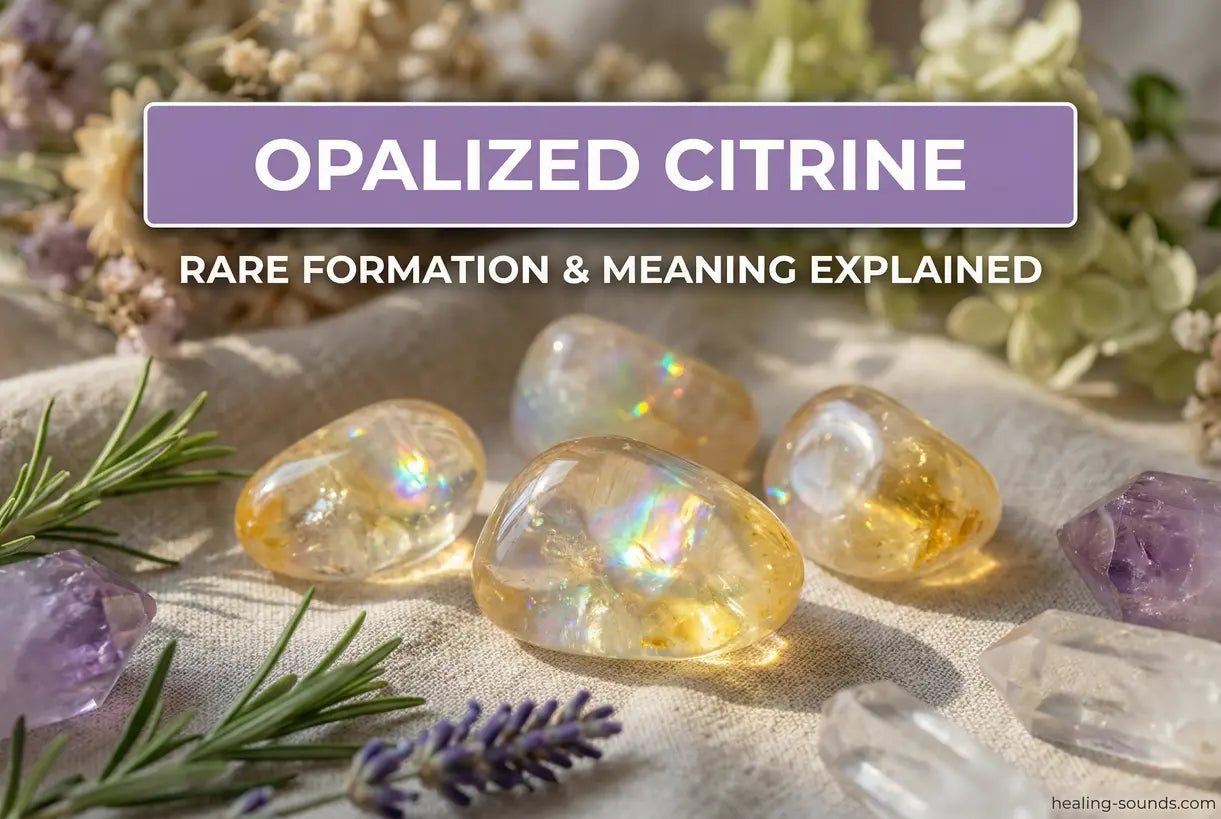
Have you ever held a crystal that seems to capture the essence of the sun while shimmering with the elusive, multicolored magic of a rainbow? Opalized citrine is a captivating and rare variety of quartz that bridges the gap between the golden warmth of traditional citrine and the prismatic flash of opal. For crystal enthusiasts and collectors, finding a genuine piece of this stone is akin to discovering a hidden treasure, offering a unique vibration that resonates deeply with the solar plexus and crown chakras.
Unlike standard citrine, which is prized for its uniform golden or champagne hue, natural opalized citrine is sought after for its internal landscape. These stones often contain internal veils, fractures, or fluid inclusions that diffract light, creating mesmerizing rainbows and an "opal-like" iridescence. This unique optical effect amplifies the stone's metaphysical abilities, blending the abundance energies of citrine with the joyful, high-frequency vibrations of full-spectrum light.
In this guide, we will explore the fascinating citrine stone formation process that creates this rare gem, delve into its profound spiritual meaning, and provide you with the knowledge to distinguish authentic specimens from heat-treated imitations. Whether you are looking to expand your healing practice or simply adorn your altar with something extraordinary, understanding the magic of opalized citrine is the first step.
What is Opalized Citrine?
The term "opalized citrine" is often used in the gem trade to describe a specific and rare formation of Citrine Quartz. It does not typically mean the stone is a mix of opal and citrine mineralogically, but rather refers to the visual character of the crystal. These stones exhibit a distinct, watery clarity combined with internal fracturing or "veils" that produce a scattering of light similar to the play-of-color seen in precious opals. This effect is sometimes technically referred to as "Iris Citrine" or "Rainbow Citrine."
This opalized citrine meaning is deeply tied to its appearance; just as the stone reveals hidden rainbows within its golden depths, it is believed to help the wearer discover hidden joy and potential within themselves. While classic citrine is straightforward in its energy of manifestation, the opalized variety brings a softer, more ethereal energy that connects the will (Solar Plexus) with divine inspiration.

Rare Formation and Geology
To understand the value of this stone, one must look at citrine stone formation. Natural citrine is rare in nature, forming when amethyst or smoky quartz is subjected to heat from nearby magmatic bodies within the earth. This natural heating process changes the oxidation state of iron impurities, resulting in the pale yellow to smoky champagne colors characteristic of genuine stones.
The "opalized" or rainbow effect occurs when the crystal undergoes stress during its growth or cooling phases. This tectonic stress creates microscopic internal cracks or interference layers. When light enters the stone, it hits these layers and splits into spectral colors—reds, blues, greens, and violets—dancing inside the golden body of the crystal. This is a completely natural phenomenon and serves as a fingerprint of the stone's chaotic yet beautiful birth deep within the Earth's crust.
Opalized Citrine Meaning and Metaphysical Properties
In the realm of crystal healing, opalized citrine properties are revered for their duality. You get the grounding, wealth-attracting power of citrine combined with the uplifting, spiritual elevation of the rainbow rays. It is often called a "Stone of Joyful Manifestation."
The opalized citrine meaning centers on clearing blockages. The rainbows within the stone are thought to break up stagnant energy in the aura, replacing heaviness with lightness and optimism. Ideally suited for the Solar Plexus Chakra, it empowers your personal will without making you aggressive; instead, it fosters a sense of confident flow and serendipity.


Authenticity: Natural vs. Treated Citrine
One of the biggest challenges for collectors is distinguishing natural opalized citrine from heat-treated amethyst. Much of the "citrine" on the market is actually amethyst that has been baked in ovens to turn it orange. These treated stones often have a burnt, reddish-orange hue and opaque white bases, lacking the subtle clarity and champagne tones of the natural variety.
True opalized citrine will usually have a uniform, smoky-yellow or pale gold color (often called "Kundalini Citrine" or "Congo Citrine" in the trade). The rainbow inclusions should appear internal and holographic, not like surface dyes or coatings. Understanding these differences is crucial for anyone looking for opalized citrine for sale to ensure they are working with the genuine geological energy of the stone.
Watch the video below to deepen your understanding of these rare formations and see the visual differences for yourself.
How to Identify Fake Citrine?
If you are unsure about a specimen, look for bubbles. Glass imitations often contain tiny spherical air bubbles, whereas natural quartz will have irregular fluid inclusions or crystal structures. Additionally, check for color zoning; natural citrine typically has no color banding, while heat-treated amethyst may show distinct stripes of white and orange.
Incorporating Opalized Citrine into Your Rituals
Bringing opalized citrine into your daily life can be a transformative practice. Because of its rarity and high vibration, it is an excellent centerpiece for a crystal altar dedicated to abundance or new beginnings. The stone interacts beautifully with light, so placing it near a window (out of direct, scorching sunlight to prevent fading) allows it to scatter rainbows into your room, lifting the energy of the environment.

For meditation, hold the crystal in your left hand to receive its energy. Visualize the rainbow light entering your body through your hand, traveling to your solar plexus, and expanding outward to cleanse your aura. This practice is particularly effective for those seeking to overcome symptoms of depression or low self-esteem, as the stone’s energy is inherently optimistic.
Care and Cleansing
Like all quartz, opalized citrine is relatively durable, but its internal fractures make it sensitive to thermal shock. Cleanse your crystal using sound healing (singing bowls), smoke cleansing (sage or palo santo), or by placing it on a selenite charging plate. Avoid using salt water, as it can sometimes seep into the internal fissures and weaken the stone over time.
Curating Your Collection
When searching for these gems, remember that "perfect" isn't the goal. The beauty of opalized citrine lies in its imperfections—the cracks and veils that create the rainbows. Whether you choose a polished point, a raw cluster, or jewelry, look for stones that speak to you personally. For more insights on mineral authenticity, you can refer to resources like Mindat.org, a leading authority on mineralogy.
Enhance Your Vibration with Citrine
Conclusion
Opalized citrine is more than just a pretty stone; it is a powerful ally for manifestation, joy, and spiritual clarity. Its rare formation creates a unique interplay of light that serves as a constant reminder that beauty often arises from pressure and change. By choosing genuine, natural opalized citrine, you invite the energy of the sun and the magic of the rainbow into your life, helping you to shine your brightest light.
Frequently Asked Questions about Opalized Citrine
Opalized citrine is a trade name for a rare variety of natural citrine quartz that contains internal fractures, veils, or inclusions. These internal features diffract light, creating a rainbow or iridescent effect similar to opal, enhancing the stone's beauty and metaphysical properties.
Natural, untreated citrine is the rarest type, specifically those with a uniform pale yellow to smoky champagne color. "Opalized" or rainbow citrine is particularly rare due to the specific geological conditions required to form the internal light-reflecting structures.
Generally, citrine is safe for everyone. However, those who are easily overstimulated, prone to aggression, or have a "hot" temper (associated with excess fire energy) might find citrine's intense solar energy overwhelming. In such cases, pairing it with a grounding stone like smoky quartz can help.
Fake citrine (often heat-treated amethyst) typically has a reddish-orange or burnt amber color and an opaque white base. Authentic natural citrine is usually a consistent pale yellow or smoky brown/champagne color and lacks the white banding seen in treated stones.
Opalized citrine combines the abundance and manifestation properties of traditional citrine with the joy and hope associated with rainbows. It is believed to clear the aura, promote optimism, and align the Solar Plexus Chakra with higher spiritual guidance.