
For geology enthusiasts and crystal collectors alike, few specimens offer the visual intrigue and geological complexity of tube agate. Unlike standard banded agates that feature smooth, concentric rings, tube agates display distinct, tube-like channels or filaments running through the stone. These unique inclusions create stunning, often chaotic patterns that resemble organic life frozen in time. Whether you are a rockhound searching for a rare find or a spiritual seeker drawn to the grounding energy of earth stones, understanding tube agate formations unlocks a deeper appreciation for these natural marvels.
In this guide, we explore the science behind these rare formations, the specific tube agate meaning in metaphysical circles, and where distinct varieties like Lake Superior tube agate and Ochoco tube agate can be found. Discover why this specific variety of agate crystal holds such a special place in the hearts of collectors and healers.
What is Tube Agate?
Tube agate is a specific morphological variety of agate, which is itself a form of chalcedony (microcrystalline quartz). The defining feature of this stone is the presence of visible "tubes" or channels within the silica body. When cut in cross-section, these tubes often appear as "polka dots" or eye-like structures. When cut parallel to the tubes, they look like long filaments, hairs, or worm-like tracks traversing the stone.
- Key Characteristic: Visible hollow or filled channels resembling tubes.
- Appearance: Can look like moss, hair, or abstract pipes suspended in clear or milky quartz.
- Common Colors: Ranges from clear and white to vivid reds, oranges, and yellows depending on mineral impurities.
These formations differ significantly from banded tube agate, where the tubes might be surrounded by traditional agate banding, creating a complex interplay of geometry and organic flow. The visual depth provided by these three-dimensional inclusions makes them highly prized for lapidary work and jewelry.

The Geological Marvel: How Tube Agate Formations Occur
The creation of tube agate formations is a fascinating geological process that involves specific conditions within volcanic gas bubbles (vesicles) or other cavities in host rock. Unlike standard agates that form through the layer-by-layer deposition of silica gel, tube agates require a precursor mineral.
The process typically begins with the growth of needle-like or hair-like crystals within the cavity. These are often minerals like zeolites, aragonite, or rutile. Over time, silica-rich groundwater enters the cavity. This silica gel coats the existing needle crystals. Eventually, the original mineral needles may dissolve away, leaving behind hollow tubes of silica, or they may be completely replaced by the agate (pseudomorphs).
Sometimes, the tubes remain hollow, while other times they fill with different minerals or contrasting colors of agate, creating the spectacular tube agate properties visible in polished slabs. This intricate method of formation distinguishes them from the feathery inclusions found in sagenite agate, although the two are closely related and often confused.
Famous Locations and Varieties
Collectors travel the world—or scour the internet—to find specific regional varieties of this stone. Each location produces tube agates with distinct color palettes and tube structures.
Lake Superior Tube Agate
Found primarily in the northern United States along the shores of Lake Superior, Lake Superior tube agate is a coveted find for beachcombers. These agates are known for their rich red, orange, and yellow hues derived from iron oxidation. Finding a "Laker" with distinct tube formations is considered a trophy discovery due to the intense glacial polishing these stones have endured.
Ochoco Tube Agate
Oregon is a haven for rockhounds, and the Ochoco tube agate from the Ochoco Mountains is legendary. These stones often feature delicate, moss-like tubes in soft blues, whites, and earthy tones. The tubes here can be incredibly fine, sometimes requiring magnification to fully appreciate their intricacy.
Brazilian Tube Agate
On the commercial market, Brazilian tube agate is frequently seen as large, impressive geodes or slices. Brazil's massive basalt flows provide ample cavities for large agates to form. These specimens are often dyed to enhance their appeal, but natural specimens display subtle grays, whites, and browns with dramatic, thick tube formations.
Tube Agate Meaning and Metaphysical Properties
In the realm of crystal healing, tube agate meaning is closely tied to the concept of connection and perspective. Just as the tubes connect different parts of the stone, this crystal is believed to help the user connect disparate ideas or aspects of their life.
The tube agate healing properties are often associated with the mind and the nervous system. Because the formations resemble neural pathways, some energy workers use this stone to promote mental clarity, improve focus, and encourage complex problem-solving. It is considered a stone of "seeing the bigger picture," allowing one to look past surface appearances (the rind of the agate) to the intricate truth within.
- Mental Focus: Aids in concentration and analytical abilities.
- Perspective: Helps in seeing situations from multiple angles.
- Grounding: Like all agates, it offers stabilizing, earth-centric energy.
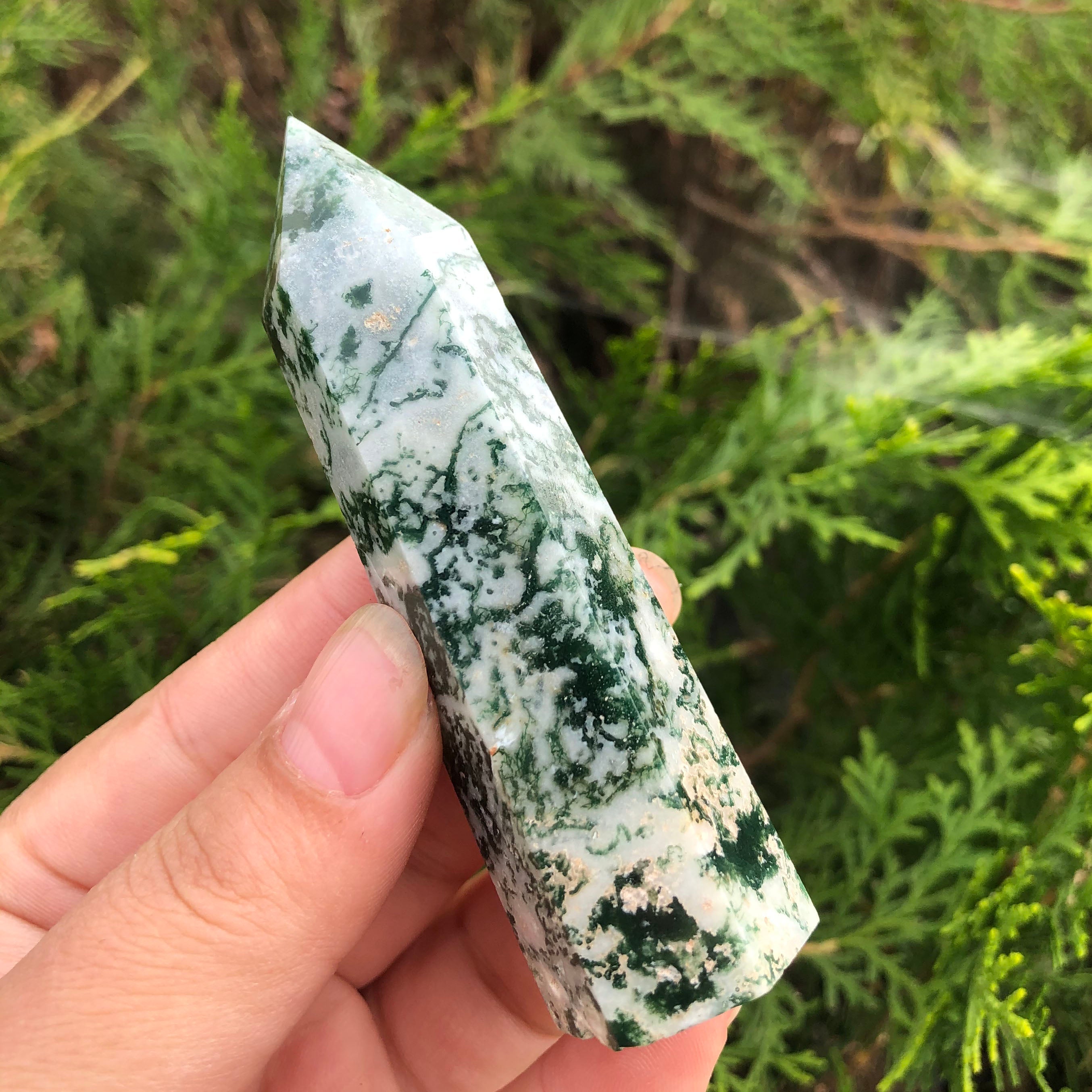
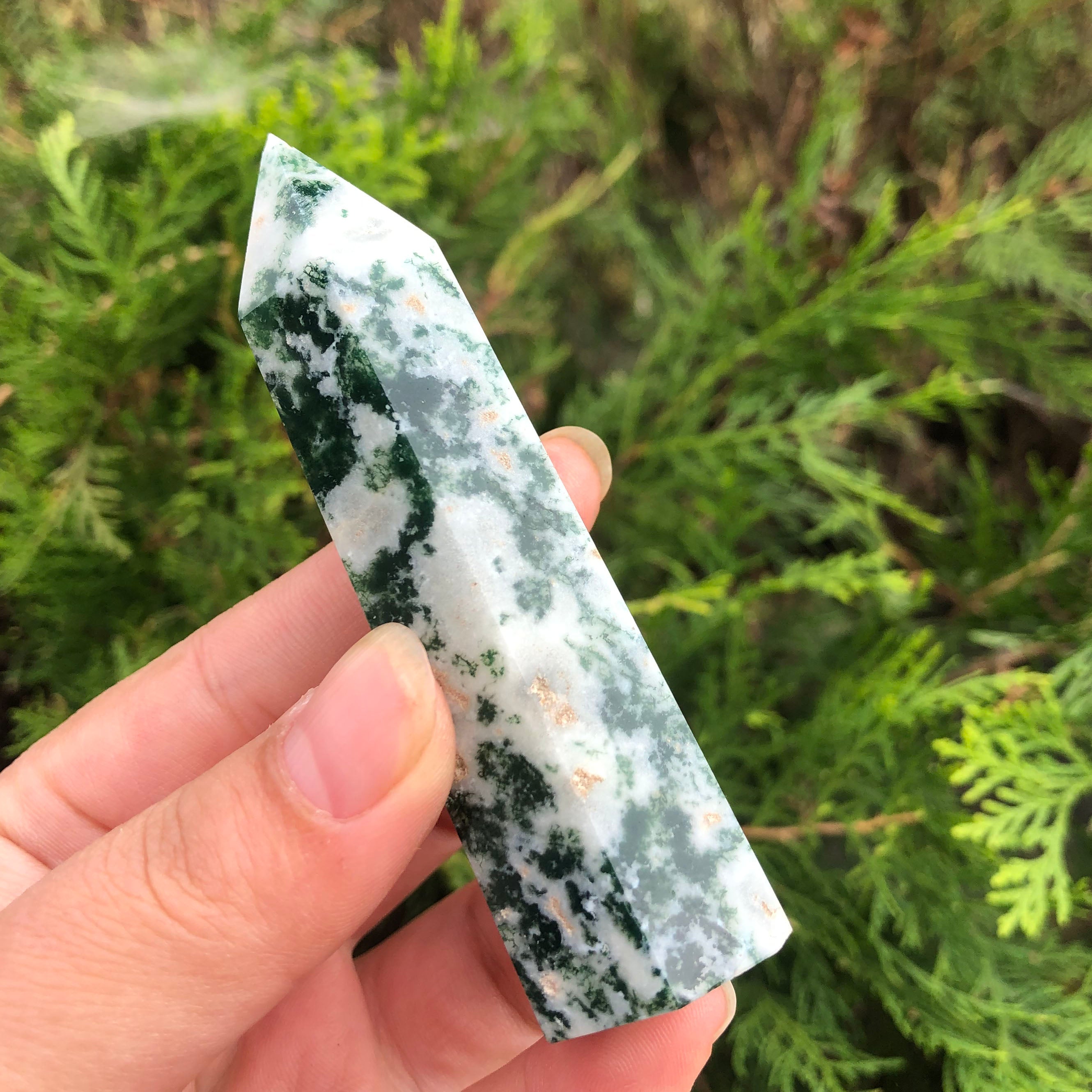
While specific tube agate specimens are rare, many collectors utilize similar agate towers to bring this stabilizing energy into their homes. Moss agate, which shares the inclusion-heavy aesthetic, is a popular alternative for those seeking similar energetic balance.
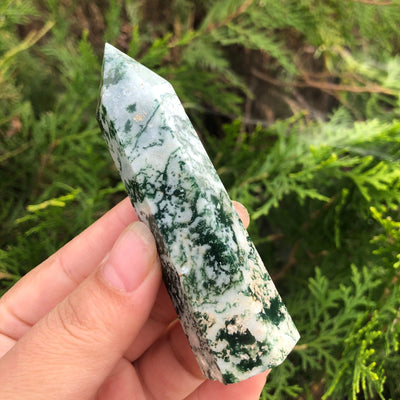
Moosachat-Kristallturm für Energieausgleich
$49.99 $59.99
Experience the harmony of formations with this Moss Agate Crystal Tower, ideal for energetic balance and geological beauty.
Explore ProductIdentification for Collectors
Identifying a tube agate in the rough can be challenging. Often, the external husk of the agate hides the inner beauty. However, experienced hunters look for "eyes" or small circular patterns on the surface of the nodule, which can indicate the ends of tubes.
Once cut, the identification becomes easier. A cross-section cut (perpendicular to the tubes) will reveal the signature polka-dot pattern. A longitudinal cut (parallel to the tubes) will show the long channels. High-quality specimens will have distinct, unbroken tubes that contrast well with the surrounding chalcedony.





Integrating Agate into Your Life
Whether you are studying the geological history of the earth or seeking a stone for meditation, agates offer a tangible connection to the planet's past. Placing tube agate or similar structured agates on a desk or workspace can foster an environment of curiosity and learning. The intricate patterns serve as a visual anchor for mindfulness practices, reminding us of the hidden complexity in all things.
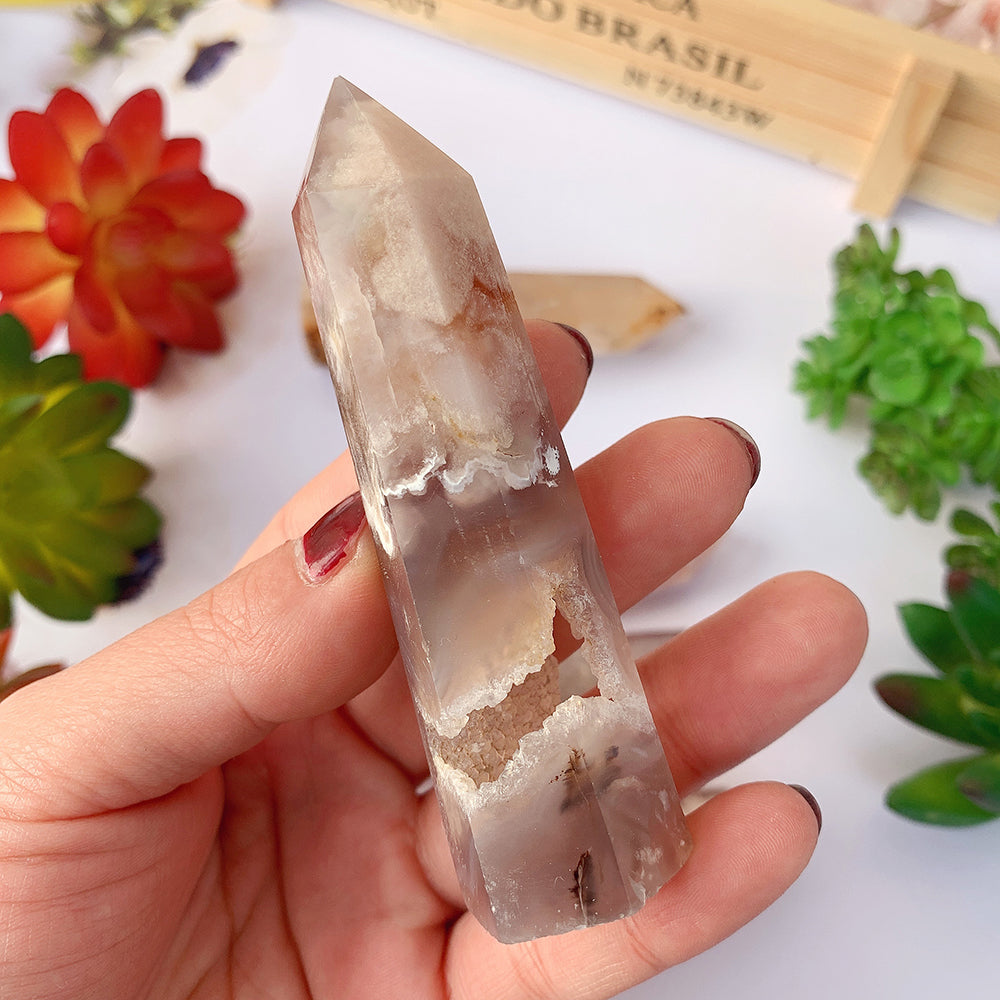
For those who cannot easily source rare tube specimens, other structured agates like Sakura (Flower) Agate or Red Agate offer similar visual stimulation and energetic grounding. These stones carry the same slow, stabilizing frequency that defines the agate family.
Agate Collections for Mindfulness

Rosa Sakura-Achatturm für achtsames Leben
$39.99
$49.99
Embrace mindful living and appreciate agate’s natural patterns with this elegant Sakura Agate crystal tower. Learn more ➔

Kraft- und Mut-Achatpyramide – Meditationsakzent
$49.99
$59.99
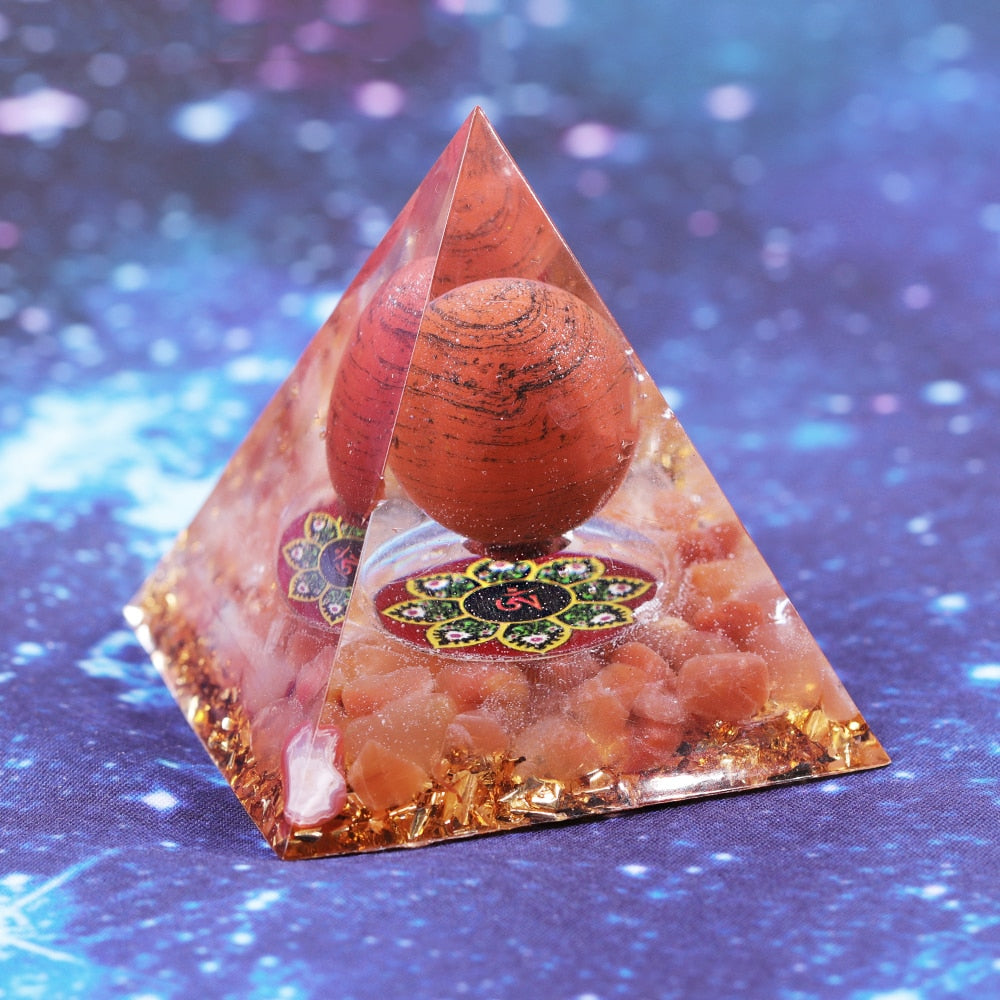
Support your journey of strength and grounding with the vibrant red agate pyramid, inspired by agate’s formative energy. Learn more ➔

Conclusion
From the shores of Lake Superior to the volcanic fields of Brazil, tube agate remains one of the most geologically fascinating members of the quartz family. Its unique genesis—forming around microscopic needles of other minerals—results in a stone that is as visually captivating as it is energetically complex. Whether you are drawn to the tube agate healing properties of clarity and connection, or simply admire the intricate "polka dot" cross-sections, these stones are a testament to nature's artistry. Exploring the world of agates opens a door to grounding energy and mindful appreciation of the earth beneath our feet.
Frequently Asked Questions about Tube Agate
Tube agate is a type of chalcedony containing visible tube-like or hair-like channels. These channels are formed when silica fills a cavity and coats pre-existing needle-like crystals (such as zeolites), which may later dissolve or remain encased.
Metaphysically, tube agate is associated with connecting disparate ideas, mental clarity, and grounding. It is believed to help users see the "bigger picture" and navigate complex problems with a calm, analytical mind.
Tube agates form in volcanic vesicles or cavities where needle-like minerals (like aragonite or rutile) first grow. Silica-rich water subsequently floods the cavity, coating these needles. Over time, the silica hardens into agate, preserving the shape of the original "tubes."
While agate comes in many colors, naturally occurring vivid blue and rich violet are generally considered among the rarest colors. Most brightly colored blue or pink agates on the market have been dyed.
Tube agate is found globally, with notable deposits in the Ochoco Mountains of Oregon (USA), the Lake Superior region (USA/Canada), and various basalt flows in Brazil and Mexico.